%20(1).png)
%20(1).png)
Palm Springs to Joshua Tree: Day Trip or Overnight Desert Adventure?


The drive from Palm Springs to Joshua Tree National Park takes roughly 50 to 60 minutes, making it one of the most accessible national park excursions in California. But "accessible" does not mean the decision is simple. A rushed two-hour visit leaves you feeling like you barely scratched the surface of one of the country's most otherworldly landscapes. This guide breaks down exactly what you can accomplish in a day, when an overnight stay is worth it, and how to plan either option without wasting a single hour of desert daylight.
Drive time: Approximately 50-60 minutes from central Palm Springs to the North Entrance of Joshua Tree National Park via CA-62 East.
Park entry fee: $30 per private vehicle, valid for 7 days. The America the Beautiful Annual Pass covers unlimited entries for one year.
Best months: October through April for comfortable hiking temperatures; summer highs regularly exceed 100°F inside the park.
Day trip feasibility: A full day (7-8 hours in the park) is genuinely satisfying. A half-day under 4 hours feels incomplete unless you target one or two specific stops.
Overnight advantage: Staying near Joshua Tree unlocks stargazing at one of California's designated International Dark Sky Parks, something no day trip can replicate.
Best strategy for most visitors: Base in Palm Springs, do a full-day trip to Joshua Tree, and return for dinner. Save an overnight for a second trip dedicated to night sky photography or multi-day hiking.
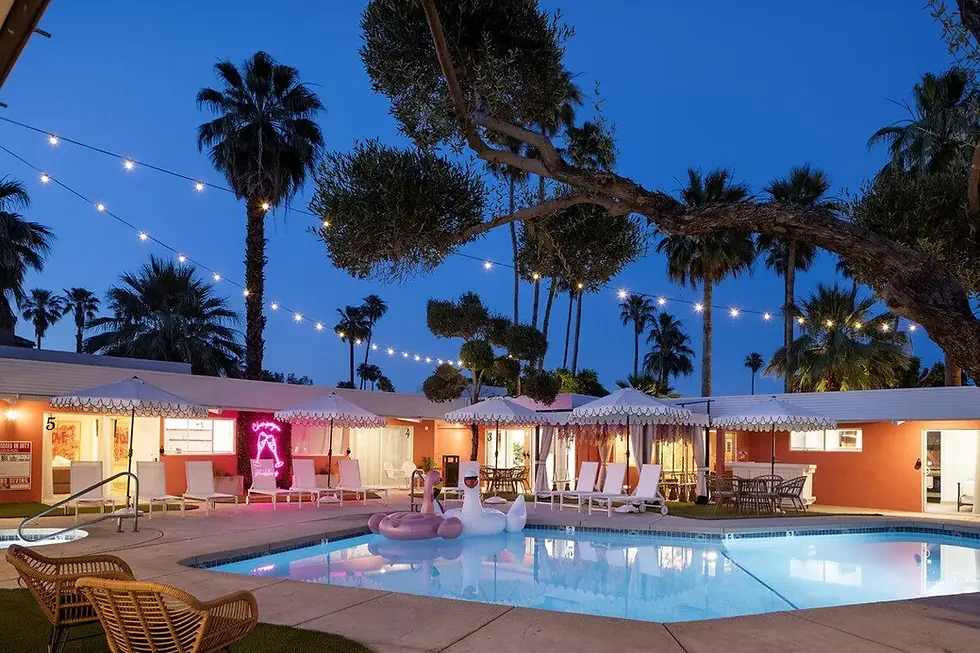
At The Muse Hotel Palm Springs, guests ask about this exact trip more than almost any other day excursion. The distance is close enough to feel spontaneous, but the park is large enough that poor planning leads to disappointment. The key is knowing your priorities before you leave the hotel parking lot.
This guide covers the logistics, the trails worth your limited time, what competitors consistently miss (seasonal advice, stargazing, dining near the park), and the honest case for when Palm Springs is the smarter home base versus splitting your stay between both destinations. For more Palm Springs day trips and inspiration, explore our full blog.

Can You Do a Day Trip from Palm Springs to Joshua Tree?
A day trip from Palm Springs to Joshua Tree National Park is not only possible but genuinely rewarding, provided you leave early and plan your stops in advance. The North Entrance, accessed via CA-62 East through Yucca Valley, sits roughly 42 miles from central Palm Springs. Most visitors arrive at the gate within 50 to 60 minutes of departing.
The practical math works as follows. Leave Palm Springs by 7 AM, arrive at the North Entrance by 8 AM, and you have six to seven solid hours in the park before afternoon heat becomes a factor from May through September. During cooler months, that window extends comfortably into early evening.
What you can realistically cover in one day: the Arch Rock Trail (approximately 1 mile, easy), Skull Rock (roadside, no hiking required), Barker Dam Trail (1.1-mile loop, flat terrain, petroglyphs included), and a stop at Hall of Horrors. That itinerary covers the park's four most photogenic locations without leaving you running. Add a late lunch in Twentynine Palms and you have a full, satisfying day.
What you cannot cover in one day: the park's western reaches near the Cholla Cactus Garden, serious climbing routes, and the night sky. Those require either a very early departure or an overnight stay near the park. For most first-time visitors in 2026, a well-planned day trip from Palm Springs covers the highlights without compromise.
One logistical note most guides skip: there is no cell service inside Joshua Tree National Park. Download offline Google Maps before you leave Palm Springs, and screenshot your planned stops. The park spans roughly 800,000 acres and getting directionally confused without a signal is genuinely easy.
What Are the Best Trails to Prioritize on a Joshua Tree Day Trip?
Joshua Tree National Park's most accessible and visually rewarding trails cluster along Park Boulevard between the North and West Entrances, making it straightforward to build a linear itinerary that minimizes backtracking. First-time visitors should prioritize these four stops in geographic order, entering at the North Entrance and exiting at the West Entrance to create a natural loop.
Arch Rock Trail
Arch Rock is a 1-mile out-and-back trail rated easy, departing from the Twin Tanks parking area near White Tank Campground. Note: do not park at White Tank Campground itself, as parking is not permitted for day-use visitors there. The arch formation is genuinely impressive for a short walk. Plan 45 minutes including photos.
Skull Rock
Skull Rock requires no hiking. The formation sits steps from roadside parking along Park Boulevard, making it the right call for visitors with mobility limitations or limited time. The crowd peaks between 10 AM and noon, so arrive before that window or push it to mid-afternoon when tour buses have moved on.
Hall of Horrors
Hall of Horrors is a loop trail under 1 mile on flat terrain, featuring dense boulder clusters and mature Joshua Trees. The slot canyon variation, which requires a bit of scrambling between boulders, elevates the difficulty to moderate but adds significant atmosphere. The parking lot has vault toilets, which matters for planning purposes. Earth Trekkers publishes a detailed Hall of Horrors hiking guide if you want elevation profiles before you go.
Barker Dam Trail
Barker Dam Trail is a 1.1-mile flat loop accessible via Barker Dam Road, leading to a historic stone dam and boulders marked with petroglyphs. Turn left at the first fork to reach the petroglyphs directly, skipping the longer route to the dam if time is short. The vault toilets at the trailhead parking lot are among the better-maintained facilities in the park.
Rock climbing deserves a mention here because Joshua Tree is a world-class destination for the sport, with hundreds of established routes across skill levels. The Hidden Valley and Intersection Rock areas are the most accessible for beginners. If your group includes climbers, even a morning session at Hidden Valley justifies the drive on its own. Most day-trippers never know this option exists because standard itinerary guides skip it entirely.

Is It Better to Stay in Joshua Tree or Palm Springs?
Choosing between Joshua Tree and Palm Springs as your base depends on two factors: how much time you want inside the national park and what you want from your evenings. Palm Springs and Joshua Tree serve fundamentally different travel personalities, and the right answer shifts depending on your group and itinerary.
Choose Palm Springs as your base if:
You want access to restaurants, pools, boutique hotels, and nightlife after a day of hiking.
You are traveling with a group that has mixed interests (some want to hike, others want to relax poolside).
You plan to combine Joshua Tree with other Coachella Valley activities like the Palm Springs Aerial Tramway, Indian Canyons, or Palm Canyon Drive shopping.
You are visiting during peak season (February through April) when Palm Springs' event calendar is most active.
Choose a Joshua Tree-area stay if:
Stargazing is a primary goal. Joshua Tree is a designated International Dark Sky Park, and the difference between observing the Milky Way from inside the park versus driving back to Palm Springs at night is not subtle.
You want to be first on the trails at dawn without a 60-minute commute.
You are a serious photographer or climber who wants multiple days in the park.
A slower, quieter experience in a small-town setting genuinely appeals to you.
For couples or groups doing a 3-night trip in 2026, the practical answer is usually two nights in Palm Springs and one night near Joshua Tree (or the reverse). That structure lets you experience both settings without sacrificing comfort for the majority of the trip.
Guests staying at The Kate Suite have Joshua Tree National Park roughly 45 miles away, a clean hour's drive. The suite's full kitchen and private patio make it easy to pack a trail lunch the night before and leave at first light, which is genuinely the best strategy for a day trip during warmer months.
For accommodation near the park itself, Sacred Sands is a guest house approximately 1 mile from the park entrance and is frequently cited by visitors for its outdoor bathtub and off-grid atmosphere. It books far in advance during spring and fall. For a second-night splurge, Estrella Perdida offers an adults-oriented desert experience in the Joshua Tree area. Both are well-regarded, but neither offers the range of dining, activities, and amenities that Palm Springs provides in the evenings.
Is Joshua Tree Worth a Day Trip from Palm Springs?
Joshua Tree National Park is absolutely worth a day trip from Palm Springs, particularly for first-time visitors who have never seen the park's boulder landscapes and Mojave Desert ecosystem. The park's combination of geological formations, unique flora, and open desert silence is unlike anything in the Palm Springs area itself. According to the National Park Service, Joshua Tree receives several million visitors annually, and the majority arrive as day-trippers rather than campers or overnight guests.
The honest caveat: a day trip only feels complete if you spend a full day, not a half-day. Visitors who arrive at noon and leave by 4 PM consistently report that they felt rushed and wish they had seen more. The park is large, and the best stops are spread across a 30-mile corridor along Park Boulevard.
For visitors who prefer a guided experience, Viator offers several options departing from Palm Springs. The Joshua Tree Scenic Small-Group Tour from Palm Springs includes a knowledgeable guide and removes all navigation stress. For a more adventurous format, the Open Air Hummer Adventure Tour uses a military-style vehicle with a park guide and covers terrain standard vehicles cannot access. Both tours run from the Palm Springs area and handle the logistics entirely.
Self-driving remains the most flexible option. Park entry costs $30 per private vehicle, valid for 7 days. If you visit three or more national parks in a calendar year, the America the Beautiful Annual Pass costs $80 and covers unlimited entries, making it the better financial decision for active outdoor travelers.
What Visitors Miss: Stargazing, Climbing, and the Towns Near the Park
Joshua Tree National Park holds International Dark Sky Park designation, a formal certification recognizing exceptionally low light pollution and visibility of the night sky. On a clear, moonless night inside the park, the Milky Way is visible to the naked eye with a clarity that is rare in Southern California. This is the single strongest argument for spending at least one night near the park rather than driving back to Palm Springs after sunset. For more on Palm Springs star gazing and the ultimate desert sky guide, we have you covered.
The best stargazing locations inside the park are away from the North and West Entrance roads, where ambient light from Yucca Valley and Twentynine Palms has the least impact. The Cholla Cactus Garden area and the remote Cottonwood Spring zone offer the darkest skies, though the latter requires driving the full length of the park. If you do stay overnight near Joshua Tree, plan to be out by 9 PM for the best conditions before the moon rises.
The Towns You Actually Drive Through
First-time visitors frequently confuse the geography around the park. Here is the straightforward version: the West Entrance is accessed from Joshua Tree town and nearby Yucca Valley, both on CA-62 west of the park. The North Entrance is accessed from Twentynine Palms (often written as 29 Palms), on CA-62 east of the park. These are distinct communities with different characters, and understanding this distinction prevents the very common mistake of planning to exit one entrance and ending up miles from your planned lunch stop.
Twentynine Palms functions as the gateway from the North Entrance. It has a walkable downtown strip with an artsy, small-town character that rewards an hour of exploration after a morning hike. Specific stops worth your time include the following.
Art Queen, created by local artist Shari Elf, sells upcycled clothing, posters, and handmade pieces from a courtyard location tucked into an alleyway off the main strip. Right next door, the World Famous Crochet Museum is exactly what it sounds like: a tiny, one-person-at-a-time museum dedicated entirely to crocheted art. It is free to enter (donations accepted), takes about five minutes, and is genuinely delightful.
The Station is a former gas station converted into a gift shop with cold beverages and local goods. Be aware it is closed Tuesdays and Wednesdays, so plan accordingly. The Muffler Man statue standing outside is a fiberglass figure from the 1960s-70s originally created to attract retail customers; the history of Muffler Men goes back to the first Paul Bunyan statue built in Flagstaff, Arizona.
The Noah Purifoy Outdoor Desert Art Museum is free to visit (donations via Venmo accepted) and located down a dirt road from the main Twentynine Palms strip. Every piece was created by artist Noah Purifoy (1917-2004) from found objects and discarded materials. The installation sprawls across open desert and takes 30 to 45 minutes to walk through fully. It is the single most underrated stop in the entire Coachella Valley-Joshua Tree corridor.
Pioneertown, built in 1946 as a functional Western film set, sits northwest of the park off CA-62 near Yucca Valley. Real people live there today. The main street, Mane Street, has shops, a post office, and a few restaurants. It photographs remarkably well and makes a logical stop when exiting via the West Entrance.

When Is the Best Time of Year to Make This Trip?
Seasonal timing is the single most important planning variable for the Palm Springs to Joshua Tree route, and it is the factor most travel guides skip entirely. The desert climate inside the park behaves differently from Palm Springs itself, and the gap between the two becomes extreme in summer.
Season | Palm Springs Temp | Joshua Tree Temp | Crowds | Recommendation |
Oct-Nov | 70-85°F | 60-80°F | Moderate | Excellent: best hiking weather, lighter crowds than spring |
Dec-Jan | 55-70°F | 40-65°F | Low | Good: clear skies, cold nights. Pack layers for evening stargazing |
Feb-Apr | 70-90°F | 60-85°F | High (peak) | Best wildflower blooms but expect crowds at trailheads. Arrive by 8 AM |
May-Jun | 90-105°F | 85-100°F | Low | Risky: heat builds fast inside the park. Only viable with a very early start and strict turnaround |
Jul-Sep | 100-115°F | 95-110°F | Very low | Not recommended: genuine heat-related risk for unprepared hikers |
The February through April peak season in Palm Springs coincides with optimal hiking conditions at Joshua Tree, which is why demand for the day trip is highest during these months. According to AirROI's 2026 Palm Springs STR Report, peak-season occupancy in the area averages around 50% with daily rates reaching roughly $571 per night, reflecting how concentrated demand becomes during this window. Book both your hotel and any guided tours well in advance if you are visiting between February and April.
October and November are genuinely the underrated window. Temperatures are cooperative, the spring crowds have not arrived, and the desert light in autumn has a particular warmth that makes the boulder formations photograph exceptionally well. If flexibility exists in your schedule, aim for mid-October.
One practical note for spring visitors: pollen counts in the Coachella Valley are notably high during February and March as desert plants bloom. Visitors with seasonal allergies should bring antihistamines and check local air quality before heading out.
What to Pack and Practical Tips for the Drive
Packing for the Palm Springs to Joshua Tree day trip is not complicated, but under-preparing for the desert is the most common mistake made by first-time visitors. The park has no food vendors, limited shade outside canyon areas, and no cell service. Everything you need must come with you.
Water
Bring more water than you think you need. The National Park Service recommends at least one liter per hour of hiking in temperatures above 80°F. For a 4-hour visit during spring, that means packing at least 4 liters per person, not a single 20-ounce bottle from a gas station on CA-62.
Footwear and Layers
Trail shoes or hiking boots with ankle support matter more at Joshua Tree than at most parks because the terrain shifts rapidly from sandy trail to loose granite. Sneakers work for Skull Rock and Barker Dam but become genuinely uncomfortable on Hall of Horrors if you take the slot canyon route. Layers are critical from November through March: mornings in the park can be 30-40°F colder than afternoons.
Sun Protection
High-SPF sunscreen, a wide-brim hat, and UV-protective sunglasses are non-negotiable from March through October. Elevation inside the park (roughly 4,000 feet at the higher plateau sections) amplifies UV exposure compared to Palm Springs at roughly 450 feet.
Navigation
Download offline Google Maps for the Joshua Tree area before you leave Palm Springs. No cell signal means no real-time navigation inside the park. Screenshot the route from the North Entrance to each trailhead and pin them to your phone's photo album in order.
Entrance Strategy
The North Entrance (via Indian Canyon Drive north from Palm Springs, then CA-62 East, then right on Utah Trail) is the natural arrival point from Palm Springs. Use the West Entrance (near Joshua Tree town on CA-62 West) as your exit to create a loop itinerary and avoid backtracking. This structure places Arch Rock and Skull Rock early in your day and Hall of Horrors and Barker Dam in the middle, finishing near the West Entrance.
If you are doing this trip from The Sofia Suite, note that Joshua Tree's North Entrance is approximately 40 miles away. Pack the night before using the full kitchen, leave by 7 AM, and you will beat most of the tour bus traffic to the first trailhead.
Day Trip vs. Overnight: An Honest Comparison
The day trip versus overnight decision for the Palm Springs to Joshua Tree route comes down to three variables: your priorities inside the park, your tolerance for early wake-up times, and what you want from your evenings. Below is a side-by-side comparison to help you decide.
Factor | Day Trip from Palm Springs | Overnight Near Joshua Tree |
Drive time each way | 50-60 min from central Palm Springs | None (staying at the park) |
Time in the park | 6-8 hours (full day) | Dawn to dusk across multiple days |
Stargazing access | Not practical (2-hour night drive back) | Full access to International Dark Sky Park |
Evening dining | Palm Springs restaurants (full selection) | Limited options in Twentynine Palms or Yucca Valley |
Accommodation comfort | Full-service Palm Springs hotel amenities | Varies; options like Sacred Sands are atmospheric but limited |
Best for | First-time visitors, mixed-interest groups, couples combining activities | Photographers, serious hikers, stargazers, return visitors |
Cost | $30 park entry, gas (approx. $15-20 round trip), meals in Palm Springs | $30 park entry plus Joshua Tree-area accommodation (typically $200-400/night for quality options) |
For most visitors in 2026, the day trip wins on value and convenience. Palm Springs has the restaurants, pools, and nightlife that make a desert trip feel complete. Joshua Tree supplies the landscape and silence. You do not need to sacrifice one for the other on a first visit.
The overnight option earns its keep on a second trip, when the novelty of the boulder hikes has been absorbed and the appeal of sitting under 10,000 stars with no light pollution becomes the actual reason for going. That experience genuinely cannot be replicated from a Palm Springs Hotel room, and it justifies the trade-off in comfort and dining options entirely.
Frequently Asked Questions
How long should I spend at Joshua Tree National Park on a day trip from Palm Springs?
Plan for a minimum of 6 full hours inside the park to cover the main stops comfortably. Arriving at the North Entrance by 8 AM and departing by 4 PM gives you enough time to hike Arch Rock, Skull Rock, Hall of Horrors, and Barker Dam Trail without rushing. Half-day visits under 4 hours consistently leave travelers feeling they saw only a fraction of the park.
What is the park entrance fee for Joshua Tree in 2026?
The current entrance fee is $30 per private vehicle, valid for 7 days from purchase. If you visit three or more national parks annually, the America the Beautiful Annual Pass costs $80 and covers unlimited entries to all national parks and federal recreation lands for one year, making it significantly more economical for frequent outdoor travelers.
Is there cell service inside Joshua Tree National Park?
There is no reliable cell service inside Joshua Tree National Park. Download offline Google Maps for the Joshua Tree area before leaving Palm Springs, and screenshot directions to each planned trailhead. The park spans roughly 800,000 acres, and navigating without a signal in the interior sections is genuinely disorienting for first-time visitors.
What was the 2-hour rule in Palm Springs?
The "2-hour rule" in Palm Springs historically referred to informal local guidance that Joshua Tree was within a 2-hour round trip from downtown, making it feasible as a morning excursion. In practice, the drive takes 50 to 60 minutes each way, so the round-trip drive alone accounts for approximately 2 hours. A meaningful visit requires planning for a full day, not a 2-hour round trip.
Can you stargaze at Joshua Tree on a day trip from Palm Springs?
Stargazing is not practical on a standard day trip from Palm Springs. By the time the sky darkens enough to see the Milky Way (typically 1-2 hours after sunset), you would be facing a 60-minute drive back to Palm Springs on an unlit desert highway. Joshua Tree holds International Dark Sky Park designation, and fully experiencing the night sky requires at least one overnight stay near the park.
Are there wheelchair-accessible trails at Joshua Tree National Park?
Joshua Tree National Park has several mobility-accessible options. The Skull Rock formation is viewable directly from roadside parking without any trail walking required. The Keys View overlook, which offers panoramic desert views extending to the Salton Sea on clear days, is paved and accessible. The Oasis Visitor Center near the North Entrance also has accessible facilities and informational exhibits. The National Park Service website lists current accessibility details for each trailhead.
Should I book a guided tour or self-drive from Palm Springs to Joshua Tree?
Self-driving offers more flexibility and allows you to linger at stops that interest you most. A guided tour is the smarter choice if navigation stress concerns you, if you want expert geological and ecological commentary, or if your group prefers not to manage the logistics. Viator offers several Palm Springs-based tour options including small-group scenic tours and open-air Hummer adventures with park-licensed guides. For first-time visitors who are comfortable with navigation and have downloaded offline maps, self-driving is perfectly manageable.
Planning Your Trip: The Practical Summary
The Palm Springs to Joshua Tree route rewards travelers who plan it deliberately rather than treating it as an afterthought to a poolside weekend. For most visitors, the winning strategy is a full-day trip from a Palm Springs base: leave early, enter at the North Entrance, hit four or five key stops in geographic order, end with lunch in Twentynine Palms, and return to Palm Springs for dinner.
If your visit falls between October and April, conditions are genuinely excellent. If you are traveling in May through September, shift your arrival to 6:30 AM and plan to be out of the exposed interior of the park by noon. Summer heat inside the park is not a minor inconvenience; it is a genuine safety consideration.
Save an overnight near Joshua Tree for a dedicated second trip, ideally during a new moon week in autumn or winter when the dark sky is at its most spectacular. That visit has a completely different character from the day trip, and both are worth doing.
As California visitor volume continues growing in 2026, with projected growth of 1.7% according to Visit Greater Palm Springs research, Joshua Tree's most popular trailheads will see increasing demand during spring peak season. Arriving early, having a plan, and building in flexibility are the practical tools that separate a memorable desert experience from a crowded, rushed one. For even more unforgettable things to do near Joshua Tree, our 2026 guide has the full rundown.

After a full day hiking the boulder fields of Joshua Tree, returning to a heated pool in Palm Springs is not a luxury, it is the logical ending to a near-perfect desert day. The Marilyn Suite at The Muse Hotel Palm Springs puts you a clean hour from the North Entrance with a full kitchen for packing trail snacks the night before and a private patio for unwinding afterward. Book your stay at The Muse Hotel and use Palm Springs as the polished, comfortable headquarters your Joshua Tree adventure deserves.

Comments