%20(1).png)
%20(1).png)
Why Adults-Only Hotels Still End Up With Noisy Guests


Age restrictions do not equal quiet: Adults-only status blocks guests under 18 (or 21 at some properties), but adults create noise too, often more deliberately and at later hours than children.
Sleep disruption is widespread: Over 60% of hotel guests report disrupted sleep due to noise, according to research cited in the Journal of Clinical Sleep Medicine, and adults-only properties are not exempt.
Property design matters as much as policy: Open pool decks, shared bars, and thin walls create noise channels that no age restriction can close.
Some adults-only resorts are party properties by design: Their marketing targets high-energy adult travelers, which conflicts directly with guests expecting a serene escape.
Smaller boutique hotels offer more control: A nine-suite property like The Muse Hotel Palm Springs can actively manage the guest atmosphere in ways a 300-room resort never can.
Smart booking decisions reduce risk: Reading reviews for specific mentions of music times, DJ schedules, and proximity to nightlife gives you better noise intel than any hotel label.
The promise of an adults-only hotel sounds straightforward: no screaming toddlers at the pool, no family chaos in the hallway, no cartoon soundtracks bleeding through the wall at 7 a.m. And that promise is technically kept. What the designation does not promise is silence, consideration, or a shared understanding of what "relaxing" actually means.
In 2026, Greater Palm Springs draws over 14 million visitors annually, according to the Greater Palm Springs Convention and Visitors Bureau, with 6.4 million of those staying overnight. That volume creates intense demand for adults-only boutique properties. But it also means every type of adult traveler, from those seeking genuine quiet to those planning to close down the pool bar, is competing for the same rooms under the same label.
Understanding why the adults-only category produces such variable results requires looking at what the label actually controls, what it cannot control, and how hotel design and marketing strategy shape the experience as much as any written policy. This guide covers each of those layers, then gives you a practical framework for booking a stay where the adults-only designation actually delivers.

Why Would a Hotel Be Adults-Only in the First Place?
An adults-only hotel is a property that restricts occupancy to guests above a minimum age threshold, typically 18, though some properties set the bar at 21 or even 25. The rationale is straightforward: families with young children generate a specific category of noise and activity (splashing in pools, running in corridors, early morning energy) that some travelers want to avoid entirely. Adults-only status is a direct marketing response to that demand.
The designation originated most visibly in all-inclusive Caribbean and Mexican resorts, where the contrast between family resorts and adult-focused properties became a meaningful booking differentiator. Properties like those operated by brands such as Catalonia Hotels have used the classification to attract couples and groups seeking a more controlled, styled experience. The model has since spread to boutique hotels, wellness retreats, and city-center properties across the United States, including Palm Springs, California.
In Palm Springs specifically, adults-only positioning aligns with the destination's historic identity as a retreat for design-conscious, experience-focused travelers. The city's mid-century modern architecture, curated restaurant scene, and boutique hotel culture attract guests who are self-selecting for a certain aesthetic sensibility. An adults-only label in this context signals not just an age restriction but a particular tone: unhurried, stylish, intentional.
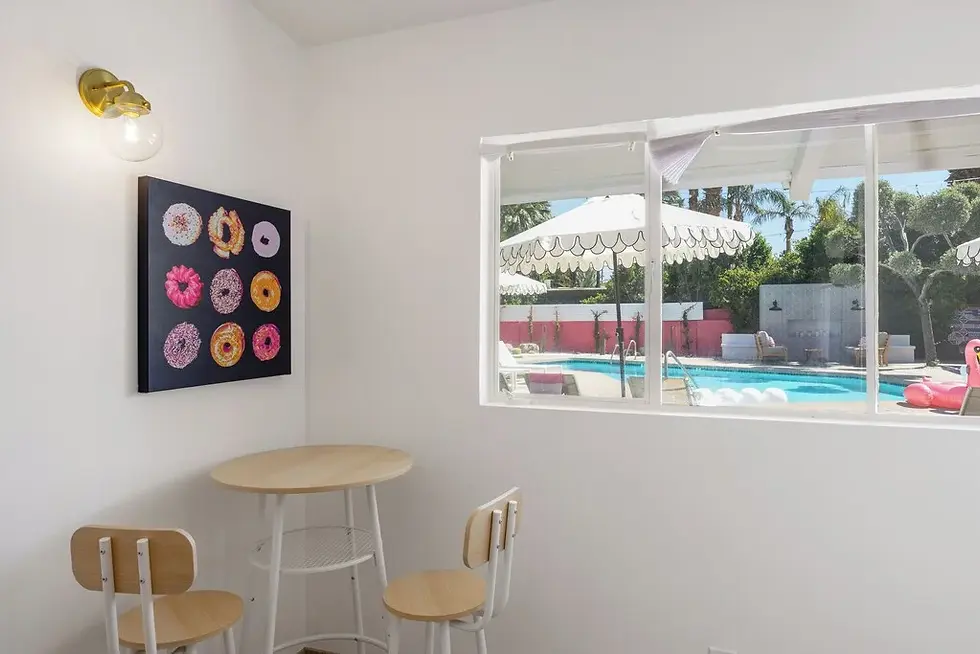
For a property like The Muse Hotel Palm Springs, located in the Warm Sands neighborhood about 2.1 miles from downtown, the adults-only designation reflects the nature of the suites themselves. Each of the nine individually designed rooms, from The Barbie Suite with its king bed and direct pool courtyard access, to The Marilyn Suite with its bold mid-century design and secluded backyard oasis, is built for adult experiences. A toddler in The Barbie Suite is not the target use case, and the adults-only policy ensures it stays that way.
What Does 'Adults-Only' Actually Regulate, and What Does It Miss?
The adults-only classification regulates one variable: the age of the guests checking in. Specifically, it prevents families from booking rooms for children under the stated minimum age. It does not regulate volume, behavior after check-in, the type of group celebration happening next door, or the decisions of neighboring properties whose music carries over a shared fence. These are the variables that actually determine whether your stay is quiet.
This is the gap that most adults-only hotel marketing glosses over entirely, and it is the reason so many travelers arrive at technically compliant adults-only properties and still spend Friday night listening to a group celebrating a milestone birthday at high volume two doors down. Adults are fully capable of creating the kinds of disruptions typically attributed to families, and they often do so at hours that families typically would not.
Consider the pool scenario that appears repeatedly in traveler accounts on platforms like TripAdvisor. At one adults-only resort, guests reported a group playing music from a portable speaker at full volume while dancing in the pool. At another, guests smoked and drank loudly in the water through the afternoon and into the evening. Neither situation involved a single child. Both involved adults exercising their full right to be present at an adults-only property while creating an environment that other adult guests found disruptive.
Some adults-only properties make the situation worse by actively marketing to high-energy demographics. When a resort describes itself as a "vibrant party destination" for adults, it is not being misleading. It is accurately describing the atmosphere it intends to cultivate. The problem arises when a traveler searching for quiet books that same property based on the adults-only label alone, without reading the marketing language carefully. Research from Alertify confirms that noise is among the most damaging sources of negative reviews and guest attrition, even at properties where staff actively manage complaints.
The distinction between a "quiet adults retreat" and a "lively adults-only escape" is critical. Both are adults-only. Only one delivers what most travelers imagine when they book under that label.

Can You Get Kicked Out of a Hotel for a Noise Complaint?
Yes, you can be removed from a hotel for repeated or severe noise violations, but the process involves escalating steps before ejection becomes the outcome. Hotels generally follow a structured response sequence: a courtesy call to the room, then an in-person warning from staff, then a final warning, and finally removal from the property if the behavior continues. Most properties document each step to protect themselves legally. Removal without prior warnings is rare and typically reserved for immediate safety threats.
The Xenia Team's manager guide to hotel noise complaints outlines this escalation process in detail, noting that hotels balance the rights and experience of the complaining guest against the potential liability of removing a paying guest without documented cause. In practice, this means a genuinely disruptive guest may receive two or three warnings before anything decisive happens, during which time the neighboring guest continues to have their sleep disrupted.
Hotels also vary considerably in how seriously they enforce noise policies depending on the size of the property and the nature of the violation. A boutique hotel with nine suites, where a manager can knock on a door personally and knows every guest in the building by name, operates very differently from a 250-room resort where the overnight desk agent is fielding six simultaneous calls. The smaller the property, the more immediate and personal the noise management tends to be.
For guests on the receiving end of a noise complaint, the outcome depends heavily on local ordinances, the hotel's own policies, and whether they signed a noise acknowledgment at check-in. Many hotels in tourist-heavy markets like Palm Springs include quiet-hours clauses in their check-in agreements, typically specifying silence after 10 p.m. or 11 p.m. Violating a signed agreement gives the hotel cleaner grounds to act quickly.
How Do Hotels Handle Noisy Guests?
Hotels handle noisy guests through a combination of staff intervention, room relocation for the affected guest, and in some cases physical removal of the disruptive party. The standard industry response, as documented by Alertify's staff guide to noise complaints, involves active listening from staff, expressed empathy to the affected guest, immediate action (typically a call or visit to the noisy room), and a follow-up check to confirm the issue was resolved.
Room relocation is often the fastest practical solution. If a quieter room is available on a higher floor or away from the event space, moving the affected guest resolves the immediate problem without confrontation. But relocation is not always possible: during peak season in Palm Springs, where vacation rental occupancy in the broader Greater Palm Springs market ran at around 52% in March 2026 according to Visit Greater Palm Springs data, full or near-full properties may have no alternative rooms to offer.
When relocation is not available, hotels may offer minimal remedies. Disposable earplugs are the classic example of a gesture that acknowledges a problem without solving it. More substantive responses include partial refunds, complimentary upgrades on a future stay, or food and beverage credits. Guests are entitled to ask for compensation when noise meaningfully disrupts their stay, particularly if it stems from a structural issue like a room above a nightclub or adjacent to an event space. The Mews analysis of common hotel guest complaints identifies noise as consistently among the top five issues, which means it should be handled with a clear protocol rather than improvised responses.
Preventive management is equally important. Properties that invest in acoustic panels, double-glazed windows, heavy carpeting, and well-maintained HVAC systems reduce the ambient noise level before any guest complains. Smart room assignment, keeping light sleepers away from elevator shafts and ice machines, is a low-cost intervention that experienced front desk staff use routinely.
What Is the 5-10 Rule in Hotels, and Does It Actually Work?
The 5-10 rule in hotels is a hospitality service standard that instructs staff to make eye contact and smile at any guest within 10 feet, and to offer a verbal greeting to any guest within 5 feet. It is a customer service protocol, not a noise or behavior management policy. The rule is about creating a culture of attentiveness and acknowledgment rather than controlling what guests do once they return to their rooms or poolside loungers.
The 5-10 rule matters in the context of noisy guests because a hotel culture where staff are engaged and visible is one where behavioral issues are more likely to be spotted early. Staff who greet guests in corridors and pool areas are also more likely to notice when a situation is escalating before it becomes a formal noise complaint. At smaller boutique properties, this kind of ambient attentiveness is natural because staff-to-guest ratios are higher relative to property size.
At large all-inclusive resorts, including some adults-only properties in the Marival Harmony category, the sheer volume of guests can overwhelm the 5-10 framework. When a pool deck holds 200 guests and two staff members are covering it, the attentiveness the rule promises becomes structurally impossible. This is one of the reasons large adults-only resorts are more likely to develop the reputation for unmanaged noise than smaller boutique hotels where every guest is visible to staff throughout the day.
For travelers, the practical takeaway is this: a hotel that trains its staff to be attentive and present is more likely to intervene early when someone's portable speaker crosses from acceptable to disruptive. Ask about staffing during your stay, particularly overnight coverage, when booking. A property with round-the-clock staffing and a clear noise policy is a meaningfully better bet than one that goes unstaffed after 10 p.m.
How Does Building Design and Property Layout Create Noise Even Without Problem Guests?
Hotel building design is one of the least-discussed but most significant sources of noise in adults-only properties, and it operates independently of guest behavior entirely. Open-plan lobbies funnel sound from the bar into every room on the ground floor. Pool decks that share a wall or fence line with a neighboring property act as amplifiers when that neighbor's DJ starts at noon. Rooftop bars, increasingly common in boutique hotel design, send bass frequencies through the building's structure into rooms directly below. None of these noise sources disappear because the guests are all over 21.
The TripAdvisor forum discussion of an adults-only St. Regis pool area that backs directly onto a Riu resort's pool is an instructive case. The L-shaped building between the two properties acted as a soundboard, channeling the Riu's outdoor music directly into the adjacent quiet zone. No amount of adults-only marketing could fix that architectural problem. Guests at the quieter property found themselves subjected to noise from a neighboring property they had no control over and no prior warning about.
Internal design choices create similar issues. Hotels with thin partition walls between rooms, hollow-core doors, uncarpeted hallways, and shared mechanical systems transmit sound from corridor conversations, TV volumes, and footsteps directly into adjacent spaces. Rooms adjacent to elevators, ice machines, laundry facilities, and event spaces are notoriously noisier than rooms in quieter wings, regardless of who is staying in them.
Specific design features that reduce noise include: concrete or masonry walls between suites rather than stud-frame construction; double-glazed windows on street-facing rooms; heavy carpet or acoustic underlayment on floors; separate HVAC units per room rather than shared duct systems; and corridors designed with sound-absorbing materials. When evaluating an adults-only hotel, these structural qualities matter as much as the age policy.
Boutique properties with individually designed suites tend to address these issues more deliberately because the design process is unit-by-unit rather than scaled from a corporate template. At The Muse Hotel Palm Springs, the nine suites each have distinct spatial configurations, which means thoughtful placement decisions were made about where each room sits relative to shared spaces. Suites like The Bowie Suite and The Audrey Suite, both featuring private patios and backyard spaces, offer physical separation from shared areas that naturally reduces the sound transmission that plagues larger properties.
How Can You Tell Before Booking Whether an Adults-Only Hotel Will Actually Be Quiet?
Evaluating whether a specific adults-only hotel will be quiet before you book requires reading between the marketing lines and looking for specific signals in the property's public information. The adults-only label tells you who will be there; it does not tell you what they will be doing. These five checks give you a much more accurate picture than any badge on a booking site.
Step 1: Read Recent Reviews for Noise-Specific Language
Search the property's reviews on TripAdvisor, Google, and Booking.com specifically for the words "music," "loud," "noise," and "quiet." Look at reviews from the past 90 days, not the top-rated all-time reviews, which skew positive. If multiple recent reviews mention a DJ schedule, pool parties, or late-night noise from a bar, that is reliable predictive data. If reviews consistently describe the property as peaceful, that pattern is equally reliable.
Step 2: Check Whether the Property Markets Itself as a Party Destination
Look at the hotel's own Instagram and website language. Properties that describe themselves as "vibrant," "lively," or "the ultimate party escape" are being honest about their atmosphere. That is the correct experience for some travelers and the wrong one for others. Properties that emphasize "intimate," "serene," "boutique," or "curated" tend to attract guests whose expectations align with quieter stays. The boutique hotel experience at The Muse Hotel Palm Springs is consistently described as intimate and design-forward, which self-selects for guests with those priorities.
Step 3: Ask About Neighboring Properties and Nearby Nightlife
Call the property and ask directly: "Are there bars, clubs, or event venues within earshot of the pool or rooms?" A good hotel will answer honestly. The Warm Sands neighborhood in Palm Springs, where The Muse Hotel Palm Springs is located, has a quieter residential character compared to properties directly on North Palm Canyon Drive, where foot traffic and nightlife noise increase significantly on weekend evenings. Downtown Palm Springs is about 2.1 miles from the property, close enough for easy access but far enough that street noise is not a factor after midnight.
Step 4: Ask About Room Occupancy Policies for Groups
Large group bookings, particularly bachelorette parties and milestone birthday celebrations, are the most common source of noise complaints at adults-only properties. Ask whether the hotel accepts large groups, whether there are quiet hours enforced after a specific time, and whether group events require advance notice. Properties with clear policies on this are more reliable than those with vague language about "respecting fellow guests."
Step 5: Consider the Scale of the Property
Smaller properties have fewer guests and more staff visibility per guest. A nine-suite boutique hotel like The Muse Hotel Palm Springs operates with a fundamentally different noise management reality than a 200-room resort. With fewer guests sharing the pool and common areas, the chance of one loud group ruining the experience for everyone else is substantially lower. If exclusivity is important to you, the Hotel Buyout option at The Muse Hotel Palm Springs takes that logic to its natural conclusion: your group is the only group on the property, which eliminates the neighbor-noise problem entirely for up to 21 guests across 10 bedrooms.
As a practical checklist, here is what to look for before booking any adults-only property:
Factor to Check | What It Tells You | Red Flag |
Recent reviews mentioning "noise" or "music" | Real guest experience with sound levels | Multiple mentions of DJ, loud pool bar, or late-night noise |
Hotel's own marketing language | Intended atmosphere and target guest | "Party," "lively," "vibrant" without a quieter alternative framing |
Proximity to bars/clubs/nightlife | External noise sources after midnight | Located on a nightlife strip or adjacent to a live music venue |
Property size and suite count | Staff-to-guest ratio and noise management capacity | 200+ rooms with one overnight desk agent |
Room location options | Distance from pool, bar, elevator, and street | No option to request a quieter room or wing |
Group booking policy | Whether large celebratory groups are accommodated | No stated quiet hours or event management policy |
One additional tip that generic travel guides miss: check whether the property is directly adjacent to a vacation rental that allows short-term party bookings. In Palm Springs, which has over 3,275 active short-term rental listings according to Airbtics data, a boutique hotel can be quiet on its own grounds while a neighboring vacation rental hosts a pool party. Street-view the address and look at what shares the fence line. It takes two minutes and can save an entire weekend.
Frequently Asked Questions
Do adults-only hotels guarantee a quiet stay?
No. Adults-only hotels guarantee that guests will be above the property's minimum age threshold, typically 18 or 21. They do not guarantee quiet, because adult guests can be just as loud as families with children, especially in celebratory contexts like bachelorette parties or milestone birthdays. Over 60% of hotel guests report sleep disruption from noise according to research cited in the Journal of Clinical Sleep Medicine, and this figure is not materially different at adults-only properties. The best predictor of a quiet stay is the hotel's size, its stated quiet-hours policy, and recent reviews specifically mentioning noise levels.
What is the difference between a party-focused adults-only resort and a quiet boutique adults-only hotel?
A party-focused adults-only resort markets itself with language like "vibrant," "lively," and "the ultimate escape," and it typically features poolside DJs, swim-up bars, and programming designed to keep energy high throughout the day and evening. A quiet boutique adults-only hotel, by contrast, uses language like "intimate," "curated," and "serene," and it typically has a smaller guest count, individually designed suites, and a staff-to-guest ratio that allows for active noise management. Both are legitimately adults-only. They deliver very different experiences. Reading marketing language and recent reviews is the only reliable way to tell them apart before you book.
Can a hotel legally remove a guest for being too loud?
Yes, a hotel can remove a guest for repeated noise violations after documented warnings. The standard process involves a courtesy call to the room, then an in-person warning, then a final warning before removal. Hotels document each step to protect themselves legally. Immediate removal without warnings is typically reserved for situations involving safety threats. Most guests who receive two clear warnings stop the behavior before removal becomes necessary. Check-in agreements at many Palm Springs hotels include explicit quiet-hours clauses, which give the property cleaner grounds to act quickly if those terms are violated.
How does the Hotel Buyout at The Muse Hotel Palm Springs address the noisy-guests problem?
The Hotel Buyout at The Muse Hotel Palm Springs resolves the noisy-neighbor problem by making your group the only group on the property. With all nine suites across 10 bedrooms reserved exclusively for your party of up to 21 guests, there are no strangers at the pool, no unknown group in the adjacent suite, and no conflict between your group's energy level and another guest's expectations. The private pool, outdoor hot tub, and shared courtyard spaces are yours alone for the duration of the stay. It is the most direct solution to the core tension between adults-only marketing and unpredictable adult behavior.
What room location choices reduce noise at most hotels?
Rooms on higher floors away from the pool, bar, and event spaces tend to be significantly quieter. Rooms at the end of hallways, away from elevator banks, ice machines, and laundry facilities, also benefit from less corridor traffic noise. On street-facing properties, requesting a room on a courtyard-facing side reduces external noise from traffic and nightlife significantly. At boutique properties with private patios or backyard spaces, those room types offer physical separation from shared areas that naturally dampens ambient sound. When booking, call the front desk and ask specifically which rooms are furthest from noise sources rather than relying on a generic "quiet room" request.
Is Palm Springs a noisy destination, and does that affect adults-only hotels there?
Palm Springs has pockets of significant nightlife noise, primarily along North and South Palm Canyon Drive and around the bar and restaurant cluster in the downtown core. Properties located directly on these streets or within a block of active nightlife venues will experience ambient street noise on Friday and Saturday nights. The Warm Sands neighborhood, where The Muse Hotel Palm Springs is situated, has a notably quieter character: more residential, less foot traffic, and away from the main nightlife strip. The tradeoff is that downtown restaurants and bars require a five-minute drive rather than a walk, but that distance is exactly what keeps the neighborhood quiet after 11 p.m.
Are there specific times of year when adults-only hotels in Palm Springs are more likely to be noisy?
Yes. April is the highest-risk month for noise at any Palm Springs property, because the Coachella Valley Music and Arts Festival and Stagecoach Festival both occur during this period, drawing very large groups of high-energy travelers throughout the region. The greater Palm Springs area targets over 16 million annual visitors by 2026 according to Greater Palm Springs CVB data, and festival months concentrate a significant share of that volume. January through March is peak season and also attracts celebratory groups, including bachelorette parties and milestone birthdays. The quietest periods tend to be October through early November and late January before the Coachella booking surge begins.
What should I do if I am already checked in and experiencing noise at an adults-only hotel?
Call the front desk immediately and describe the noise specifically: room number if you know it, type of noise, and how long it has been going on. Framing the complaint with specifics ("the guests in the room next to mine have been playing music at high volume since 11:30 p.m.") helps staff act quickly and document the issue. If the noise continues after a first call, call again and ask what steps were taken and what the next step is. If no resolution comes, ask whether a room change is available. If the noise is structural rather than guest-related, ask what compensation the property can offer for a genuinely disrupted stay. Most good hotels will offer something meaningful rather than just earplugs, but you need to ask directly.
The Bottom Line on Adults-Only Hotels and Noisy Guests
The adults-only designation is a meaningful filter, but it is a narrower one than most travelers assume. It removes children from the equation. It does not remove loud music, celebratory groups, inadequate soundproofing, or neighboring properties whose bass frequencies travel freely over a shared wall. Understanding that gap is the most useful thing you can take from this guide.
The practical answer to why adults-only hotels that claim to be adults-only still end up with noisy disruptive guests is this: because the classification addresses demographics, not behavior, and because hotel design and surrounding environment create noise independently of any guest's intentions. Recognizing that distinction changes how you book. Instead of relying on a label, you look at property size, marketing tone, neighborhood character, room location, and recent reviews that mention actual sound levels.
In 2026, with Greater Palm Springs on track for record visitation levels according to the Greater Palm Springs CVB, the demand for genuinely managed adult environments has never been higher. Travelers who book thoughtfully, matching property scale and philosophy to their actual expectations, consistently have better stays than those who rely on category labels alone.

If the core issue is control over the atmosphere around you, the most direct solution is a property where the guest list is yours to set. The Hotel Buyout at The Muse Hotel Palm Springs gives groups of up to 21 guests across 10 bedrooms exclusive use of the entire property, including the private pool and outdoor hot tub. When your group is the only group, the question of whether the adults-only label will actually deliver becomes moot. Individual suite bookings, from the intimate Taylor Suite with its private patio and full kitchen to the Duo Suite suited for four guests, are available directly at themusehotelpalmsprings.com.
Written by Maggie Williams, Owner & Operator at The Muse Hotel Palm Springs


Comments