%20(1).png)
%20(1).png)
Top Outdoor Activities in Palm Springs for Every Skill Level


Palm Springs outdoor activities range from a shaded stroll through a fan palm oasis to a two-mile hike past a 60-foot waterfall to full-day rock climbing in one of Southern California's most dramatic national parks. Greater Palm Springs receives more than 300 days of sunshine per year, according to Visit Greater Palm Springs, which means you are rarely waiting on weather. What you are managing is temperature, terrain, and timing. Get those three variables right, and you will find that the desert rewards you in ways that a beach or a mountain town simply cannot replicate.
Palm Springs offers outdoor activities at every skill level, from easy botanical walks to advanced bouldering at Joshua Tree National Park, which spans 1,250 square miles of wilderness.
The Palm Springs Aerial Tramway ascends to 8,412 feet at Mt. San Jacinto, making it one of the most dramatic single outdoor experiences in California.
Summer temperatures regularly exceed 100°F from June through October; the ideal window for strenuous activity is October through May.
Indian Canyons and Tahquitz Canyon are stewarded by the Agua Caliente Band of Cahuilla Indians and require an entrance fee; both reward early-morning arrivals.
Stargazing at Joshua Tree National Park offers some of the darkest skies in Southern California, yet most Palm Springs travel guides barely mention it.
The Muse Hotel Palm Springs, located in the Warm Sands neighborhood, sits about 10 minutes from Indian Canyons and roughly 20 minutes from the Aerial Tramway base station.
This guide covers the full spectrum: easy nature walks for visitors who want desert beauty without a workout, waterfall hikes for those with a few hours and decent footwear, and serious alpine terrain for the thrill seekers who flew into Palm Springs International Airport with a daypack already packed. You will also find the cost and timing details that competing guides consistently leave out, plus a month-by-month breakdown of when each type of activity actually makes sense.
At The Muse Hotel Palm Springs, we have hosted enough outdoor-focused guests to know which activities consistently deliver and which popular picks disappoint. The Warm Sands neighborhood location puts you close to the canyons, close to downtown, and close enough to Joshua Tree for a comfortable day trip. What follows is the guide we wish every guest had before they arrived.

What Are the Best Outdoor Activities in Palm Springs for Every Skill Level?
Outdoor activities in Palm Springs are best understood through a fitness and experience tier: beginner activities focus on flat terrain and shaded paths, intermediate options involve moderate elevation and trail distances of two to five miles, and advanced activities require physical conditioning or specialized gear. Matching your group to the right tier prevents the most common Palm Springs visitor mistake, which is underestimating the desert heat and overestimating the trail difficulty they can handle in it.
Beginner: Easy Walks, Gardens, and Gentle Desert Terrain
The Living Desert Zoo and Gardens in Palm Desert is the most accessible outdoor experience near Palm Springs for visitors who want wildlife without strenuous walking. It houses more than 140 animal species and 1,600 plant species, and the paths are paved and largely flat. Plan for two to three hours, go in the morning before 11am, and bring water regardless of the season.
Moorten Botanical Garden, about four minutes from The Edie Suite at The Muse Hotel Palm Springs, is an underrated 45-minute stop that most first-timers skip. The garden holds one of the largest private cactus collections in the world, arranged in a shaded walkway that genuinely feels like a different planet. It is calm, manageable, and genuinely photogenic without requiring any effort.
For flat desert walking with mountain views, Ruth Hardy Park near downtown Palm Springs is the kind of place locals use on a Tuesday morning. No admission fee, a loop path, mountain backdrop, and enough shade trees to make it tolerable even on warmer days.
Intermediate: Waterfall Hikes and Canyon Trails
Tahquitz Canyon is the intermediate hike with the most dramatic payoff near Palm Springs. The two-mile loop trail leads to Tahquitz Canyon Falls, a 60-foot waterfall that appeared in Frank Capra's 1937 film "Lost Horizons." The canyon is maintained by the Agua Caliente Band of Cahuilla Indians, requires an entrance fee, and is approximately 10 minutes from The Muse Hotel Palm Springs by car. Go before 9am on weekends to avoid the mid-morning crowds.
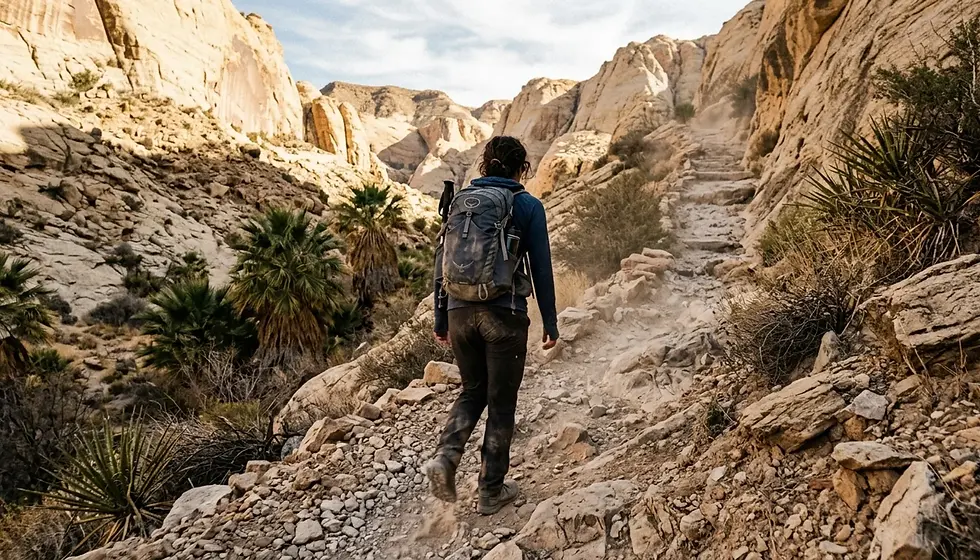
Indian Canyons, the broader trail system that includes Palm Canyon and Andreas Canyon, offers several hours of moderate desert hiking through oasis landscapes. Seven Falls, a tiered waterfall inside the system, is reachable in under an hour at a moderate pace. Bring at least two liters of water per person and wear closed-toe shoes with actual grip. Sandals are a frequent mistake here.
The Palm Springs Aerial Tramway is technically a cable car, but the hiking on the other end earns it a firm intermediate slot. The tram ascends from desert floor to 8,412 feet at Mt. San Jacinto State Park in roughly 10 minutes. Once you arrive, trails range from easy nature loops to multi-hour ridge walks with panoramic views of the Coachella Valley below. You can purchase tickets for the Palm Springs Aerial Tramway online in advance, which is worth doing during peak season (January through April) when lines form early.
Advanced: Peaks, Bouldering, and Technical Terrain
Joshua Tree National Park is the advanced anchor of any serious outdoor activities itinerary near Palm Springs. The park spans 1,250 square miles and is globally recognized as one of the premier rock climbing and bouldering destinations in North America. Enter from the north side, where the famous Joshua Trees are most dense. The Hidden Valley Loop is the recommended starting point for first-timers, an approximately one-hour walk through boulder formations that gives a real sense of the park's scale without committing to a full-day technical climb.
For serious climbers, Joshua Tree's granite monzogranite formations offer routes at every grade. The National Park Service publishes current conditions and access information at their official Joshua Tree National Park page.
San Jacinto Peak, accessible via the Aerial Tramway or by trail from Idyllwild (roughly 75 minutes from Palm Springs), reaches 10,834 feet and is the second highest peak in Southern California. The summit trail from the tram station gains approximately 2,600 feet over about five and a half miles. This is a genuine alpine day hike, not a casual stroll, and it requires proper footwear, layered clothing for the summit temperature drop, and an early start.
What Are Some Fun Things to Do in Palm Springs Outdoors?
Beyond hiking, Palm Springs outdoor activities include horseback riding through canyon oases, guided Jeep tours across San Andreas Fault terrain, multi-use trail biking, world-class tennis, and hot-air ballooning over the valley floor. The city's outdoor culture is as much about the landscape's variety as its sunshine count: in a single day you can ride through a palm oasis on horseback in the morning and stargaze at a national park in the evening.
Horseback Riding Through Indian Canyons
Smoke Tree Stables offers the most established horseback riding experience near Palm Springs. Their signature ride winds through the Indian Canyons oasis and runs one hour and forty minutes, which is long enough to actually feel the landscape rather than just pass through it. Book ahead; weekend slots fill quickly from January through April. Check availability at Smoke Tree Stables directly, as schedules vary seasonally.
The Indian Canyons trail system, stewarded by the Agua Caliente Band of Cahuilla Indians, provides the natural backdrop for this ride. The fan palms along Palm Canyon are the largest natural fan palm oasis in North America. That is not a marketing claim; it is a geographic fact that becomes obvious once you are standing in it.
Jeep and Off-Road Desert Tours
Red Jeep Tours offers guided off-road experiences through Colorado-Sonoran desert terrain, including stops at the San Andreas Fault, Indian Canyons, and Painted Canyon. The San Andreas Fault route is particularly well-suited for visitors who want geology made tangible: you can stand in the fault zone and see the visible offset in the landscape. Tours typically run two to four hours and include narration on desert ecology, indigenous land history, and geological formation.
This is one of the outdoor activities in Palm Springs that works well for groups with mixed fitness levels, since the vehicle does the terrain work while still delivering a genuine desert experience.
Biking the CV Link and Beyond
The CV Link is a multi-use path running through the Coachella Valley, connecting multiple cities and offering a flat, paved surface suitable for cyclists of most experience levels. In cooler months (November through March), morning rides offer views of the Santa Rosa and San Jacinto Mountains without punishing heat.
BIKE Palm Springs Rentals is the local outfitter most guests use for bike rentals. The Muse Hotel Palm Springs also offers a guided Modern and More Bike Tour as an add-on experience, which pairs mid-century modern architecture sightseeing with two wheels: a genuinely fun way to cover the neighborhood and appreciate why Palm Springs looks the way it does. You can also arrange bike rentals directly through The Muse Hotel Palm Springs for self-guided exploring.
When Is the Best Season for Outdoor Activities in Palm Springs?
The best season for outdoor activities in Palm Springs is October through May, with February and March representing the sweet spot for strenuous hiking, cycling, and full-day park visits. This seasonal window aligns with the data: according to Visit Greater Palm Springs, paid guest occupancy in Palm Springs vacation rentals reached 47.7% in February 2026, up from 47.1% the prior year, and 51.6% in March 2026, reflecting the concentrated demand for peak-season visits.
Here is how the year actually breaks down for outdoor planning:
Month(s) | Typical Temp Range | Best Activities | Key Caveat |
October to November | 75-90°F daytime | Canyon hikes, biking, Aerial Tramway | Shoulder season: quieter trails, lower rates |
December to January | 65-75°F daytime | All hiking, horseback riding, stargazing | Cool evenings require layers for sunset activities |
February to March | 70-85°F daytime | Everything, including summit hikes | Peak crowds; book accommodations and tram tickets ahead |
April (Coachella/Stagecoach) | 85-95°F daytime | Early morning hikes, Joshua Tree day trips | Festival period drives accommodation scarcity; book months ahead |
May | 90-100°F daytime | Early morning only, Aerial Tramway (alpine) | Heat building; start any hike by 7am |
June to October | 100-115°F daytime | Aerial Tramway, indoor alternatives, evening stargazing | Extreme heat; avoid ground-level hiking midday entirely |
Summer in Palm Springs deserves a direct word of caution. Daytime temperatures regularly reach 110°F and above from July through September. The Visit Greater Palm Springs health guidance for extreme heat months is clear: outdoor activity should be limited or avoided during heat advisories. If you are traveling with pets, the 5-second rule applies: if you cannot hold your bare hand to the ground pavement for 5 seconds without discomfort, the surface is too hot for your dog's paws. The Muse Hotel Palm Springs is pet-friendly across all its suites, and guests traveling with dogs during summer should plan outdoor activity for pre-8am windows only.
That said, summer is not a write-off. The Aerial Tramway's upper station sits in alpine conditions year-round, providing a genuine escape from the valley heat. And pool-centric stays at The Muse Hotel Palm Springs, where the heated courtyard pool becomes the main event, have their own distinct charm when the valley glows at 105°F and you are floating in cool water with the San Jacinto Mountains framing the horizon.
Where Do Celebrities Hang Out in Palm Springs and Why Outdoor Culture Matters Here
Palm Springs outdoor culture is inseparable from its history as a celebrity retreat. The city's desert setting has drawn performers, directors, and public figures since the 1930s, drawn partly by the landscape and partly by a specific kind of privacy that the terrain affords. The sprawling mid-century estates that line the residential neighborhoods were designed with outdoor living as a primary feature: courtyards, mountain views, pools oriented toward the San Jacinto range.
Today, the outdoor lifestyle that celebrities built into Palm Springs architecture is accessible to every visitor. The Parker Palm Springs, known locally for its red clay tennis courts, maintains the tradition of outdoor amenity-as-centerpiece. Indian Wells Tennis Garden hosts the BNP Paribas Open, one of the largest tennis events outside the four Grand Slams. La Quinta Resort and Club offers private lessons with USPTA-certified professionals on their courts.
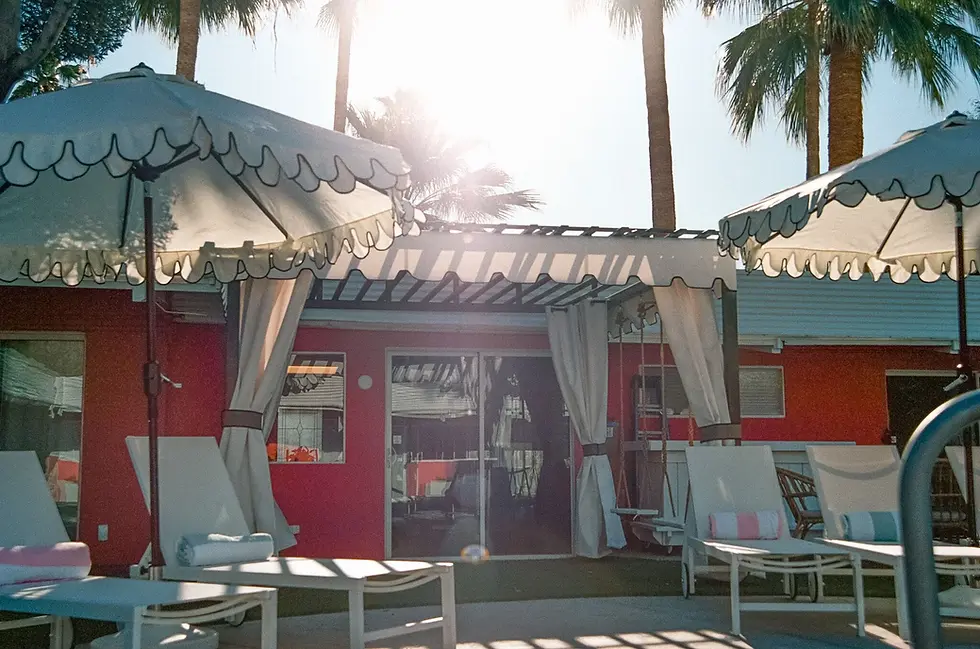
For guests staying at The Muse Hotel Palm Springs, the outdoor culture is built into the property's DNA. The heated courtyard pool, the outdoor fireplace available across multiple suites including The Bowie Suite and The Barbie Suite, and the private patios in suites like The Taylor Suite all reflect the indoor-outdoor living that defines Palm Springs at its best. You are not just near the outdoors; the property is designed around it.
What Is Stargazing Like Near Palm Springs? A Gap Most Guides Miss
Stargazing near Palm Springs, particularly at Joshua Tree National Park, is one of the most underrated outdoor activities in the region, and almost no competitor guide dedicates substantive coverage to it. Joshua Tree is consistently cited as one of the best dark-sky locations in Southern California, with light pollution low enough to see the Milky Way core on clear nights between March and October.
Specifically, the Skull Rock area and Cholla Cactus Garden within the park are accessible via paved road after dark, making them viable for visitors without off-road capability. The National Park Service periodically hosts ranger-led stargazing programs; check the Joshua Tree National Park official site for current schedules. The park entrance fee applies regardless of time of day.
For the best experience, plan a stargazing visit around new moon phases (when the moon is darkest) and go on a weeknight rather than a weekend in peak season, when parking areas fill with other visitors. The drive from The Muse Hotel Palm Springs to the park's north entrance is approximately 50 minutes, making an early evening departure practical: dinner downtown on Palm Canyon Drive, then drive out as the sky darkens.
Temperatures at Joshua Tree drop sharply after sunset, even in summer. Bring a jacket regardless of the daytime forecast. This is the detail most first-time visitors miss, and it is the difference between a memorable night and cutting the visit short.

The Agua Caliente Cultural Context: Why Indian Canyons Is More Than a Hike
Indian Canyons is managed and stewarded by the Agua Caliente Band of Cahuilla Indians, and understanding that context makes the visit substantially richer. The Agua Caliente people have occupied this desert landscape for thousands of years. The fan palm oases that draw hikers today served as reliable water and food sources for the Cahuilla long before the resort era transformed the surrounding valley.
The entrance fee collected at Indian Canyons and Tahquitz Canyon goes directly to the Agua Caliente tribal government, which uses the revenue to maintain trails, manage the natural resources, and preserve the cultural heritage of the land. This is not a state or federal park: it is tribal land that the Agua Caliente have opened to visitors as a managed experience.
Visiting with this in mind changes what you notice. The rock art at certain trail points, the specific varieties of native plants that the Cahuilla cultivated, the positioning of the oasis palms along underground water sources: these details are available on the Indian Canyons official site and through the interpretive materials at the trailhead visitor center. Take 10 minutes to read them before you start walking. The trail becomes a different experience when you understand what you are actually looking at.
From the trailhead to The Muse Hotel Palm Springs's Warm Sands location, the drive takes approximately 10 minutes, making a post-hike return to the courtyard pool a realistic and deeply satisfying finish to a morning in the canyons.
Practical Planning: Costs, Timing, and What Most Visitors Get Wrong
Most Palm Springs outdoor activity guides list attractions without providing the pricing, logistics, or honest caveats that actually determine whether a visit goes well. Here is what competitors consistently omit.
Entrance fees as of 2026: Joshua Tree National Park charges a vehicle fee for a 7-day pass (check the NPS site for current rates, as they are periodically updated). Indian Canyons and Tahquitz Canyon charge separate admission fees collected at the Agua Caliente tribal entrance. The Palm Springs Aerial Tramway has per-person ticket pricing that varies by time of day and season; purchasing in advance online avoids same-day surcharges and the risk of selling out on peak weekends.
The parking reality at Joshua Tree: During peak season (January through April), the Cholla Cactus Garden and Hidden Valley parking areas fill by 9am on weekends. Arrive before 8am or accept a long walk from overflow lots on the park road. There is no shuttle system currently operating inside the park boundaries.
What to actually bring on a canyon hike: Minimum two liters of water per person for any trail over one mile. Sunscreen with SPF 50 or higher, applied before you leave the car. Closed-toe shoes with rubber soles. A hat with full brim coverage. Sandals, flip-flops, and cotton socks are the three most common footwear mistakes on Palm Springs trails, and the rocky terrain in Indian Canyons makes them actively risky.
The Aerial Tramway line: On weekends from January through March, the line for the tram can be 45 to 60 minutes. Book online in advance, arrive at the base station by 9am, and have your tickets ready on your phone. The tram itself is worth every minute of the wait; the view from the rotating cars during the ascent is genuinely spectacular.
Group-friendly outdoor activities: If you are planning outdoor activities for a group of four or more, Jeep tours through Red Jeep Tours and horseback rides at Smoke Tree Stables are the most consistently group-friendly options, because the guided format handles the logistics. The Hotel Buyout at The Muse Hotel Palm Springs, which accommodates up to 21 guests across 10 bedrooms, is purpose-built for groups who want a central base for a full outdoor itinerary. Indian Canyons is about 10 minutes away, and Joshua Tree is roughly 50 minutes, making morning departures for day hikes straightforward from the property.
For groups who want outdoor experiences woven into the hotel stay itself, The Muse Hotel Palm Springs offers a yoga experience at the hotel as a morning warm-up before heading out to the trails, which pairs well with a post-hike afternoon at the heated courtyard pool.
Frequently Asked Questions About Outdoor Activities in Palm Springs
Is it too hot to hike in Palm Springs in summer?
From June through October, daytime temperatures in Palm Springs regularly exceed 100°F and frequently reach 110 to 115°F during peak summer weeks. Strenuous ground-level hiking during these months is genuinely dangerous without proper preparation. The Palm Springs Aerial Tramway is the best summer outdoor option, since the upper station at 8,412 feet maintains alpine temperatures year-round. If you must hike in summer, start before 7am and be back at the trailhead before 10am.
Do I need to pay an entrance fee for Indian Canyons or Tahquitz Canyon?
Yes. Both Indian Canyons and Tahquitz Canyon are managed by the Agua Caliente Band of Cahuilla Indians and charge a per-person entrance fee. Fees are collected at the trailhead entrance station. The revenue supports trail maintenance and tribal conservation programs. Check the Indian Canyons official site for current fee schedules, as rates vary by season and are occasionally updated.
How far is Joshua Tree National Park from Palm Springs?
Joshua Tree National Park is approximately 40 to 45 miles from the Palm Springs city center, roughly a 50-minute drive to the north entrance (the recommended entry point, where Joshua Trees are most dense). The drive via Highway 62 is straightforward and well-marked. The park can be comfortably done as a day trip, with a morning departure and return by late afternoon, leaving time for dinner on Palm Canyon Drive.
What outdoor activities in Palm Springs are best for groups?
Guided Jeep tours through Red Jeep Tours, horseback rides at Smoke Tree Stables, and the Palm Springs Aerial Tramway all work well for mixed-ability groups because the format accommodates different fitness levels without leaving anyone behind. For groups staying together at one property, Indian Canyons is the most accessible group hiking destination, about 10 minutes from The Muse Hotel Palm Springs, with trail options ranging from flat oasis walks to moderate canyon routes.
Is the Palm Springs Aerial Tramway worth it?
Yes, without qualification. The Palm Springs Aerial Tramway ascends from desert floor to 8,412 feet at Mt. San Jacinto State Park in approximately 10 minutes, rotating during the ascent for 360-degree views of the Coachella Valley. Once at the top, trail options range from a short nature loop to a demanding summit hike. The restaurant at the summit, called Peaks, serves dinner with panoramic views. Buy tickets in advance at the official Aerial Tramway ticketing site to avoid peak-season lines.
Are there beginner-friendly outdoor activities in Palm Springs?
Absolutely. The Living Desert Zoo and Gardens in Palm Desert offers paved, flat paths through a curated desert landscape with over 140 animal species. Moorten Botanical Garden near downtown Palm Springs is a shaded, walkable 45-minute experience with one of the world's largest private cactus collections. The lower sections of Indian Canyons, specifically the paved entry path to Palm Canyon, are accessible and visually rewarding without requiring any serious hiking fitness.
What should I wear for hiking near Palm Springs?
Closed-toe shoes with rubber soles are essential on any rocky desert trail, including Indian Canyons and Tahquitz Canyon. Wear moisture-wicking fabrics, bring a full-brim hat, and apply SPF 50 or higher sunscreen before leaving your accommodation. Avoid cotton socks, which retain moisture and cause blisters on longer walks. Carry more water than you think you need: the desert air is extremely dry and dehydration sets in faster than most visitors expect, even on mild days.
Ready to Plan Your Palm Springs Outdoor Adventure?
Palm Springs outdoor activities reward people who plan with the seasons, match their fitness level to the terrain, and choose a base that actually puts them close to the trailheads. The desert does not forgive poor preparation, but it gives back generously when you arrive ready: canyon waterfalls at 8am before the heat builds, alpine ridgelines reachable by cable car, dark skies over boulder fields that most visitors never think to stay for.
In 2026, Greater Palm Springs continues to draw over 14 million annual visitors, per Visit Greater Palm Springs data, and the outdoor landscape remains the honest heart of what the destination offers. The restaurants, the architecture, the pool afternoons: they are all better when they bookend a morning in Indian Canyons or an evening at Joshua Tree.
Whether you are coordinating a bachelorette weekend that includes a sunrise hike, planning a couples trip built around the Aerial Tramway and a canyon horseback ride, or organizing a group getaway that needs a central home base close to every trail on this list, where you stay shapes how the whole trip feels. Choose a property that puts you 10 minutes from the canyons and 50 minutes from the park, and the outdoor itinerary practically writes itself.

The Hotel Buyout at The Muse Hotel Palm Springs puts groups of up to 21 guests about 10 minutes from Indian Canyons, roughly 20 minutes from the Aerial Tramway base station, and 50 minutes from Joshua Tree's north entrance. The heated courtyard pool and outdoor hot tub are exactly what you want waiting for you after a morning on the trails. Check availability for the full hotel buyout here, or browse the individual suites at The Muse Hotel Palm Springs if your group is smaller.
Written by Maggie Williams, Owner & Operator at The Muse Hotel Palm Springs


Comments