%20(1).png)
%20(1).png)
What Is a Hotel Buyout and How Does It Work for Private Events
- The Muse Hotel
- 1 day ago
- 16 min read


A hotel buyout is the exclusive reservation of an entire hotel property for one group, during which every guest room, amenity, pool, and common area is closed to outside guests and dedicated solely to your event. Unlike a standard room block, which reserves a portion of hotel inventory while other guests stay on property, a full hotel buyout gives your group complete privacy, unrestricted use of all spaces, and the ability to customize the experience from arrival through checkout. If you are coordinating a bachelorette weekend, milestone birthday, corporate retreat, or private celebration and you want the property to feel like yours rather than shared with strangers, understanding what is a hotel buyout and how does it work for private events is the first step toward planning something genuinely memorable.
A hotel buyout means your group has exclusive access to every room, pool, lounge, and amenity on the property for the duration of your stay, with no other guests present.
Boutique hotels with 10 to 40 rooms are the most common buyout candidates; large city hotels rarely agree to full-property exclusives because the revenue math rarely works.
Contracts typically require a minimum stay of two to three nights, a deposit, and food and beverage minimums that vary by property size and star rating.
Room blocks differ fundamentally: a block reserves 10 to 30 rooms at a fixed rate while other guests remain on property, and attrition clauses usually require you to fill 80 to 90 percent of reserved rooms or pay for the shortfall.
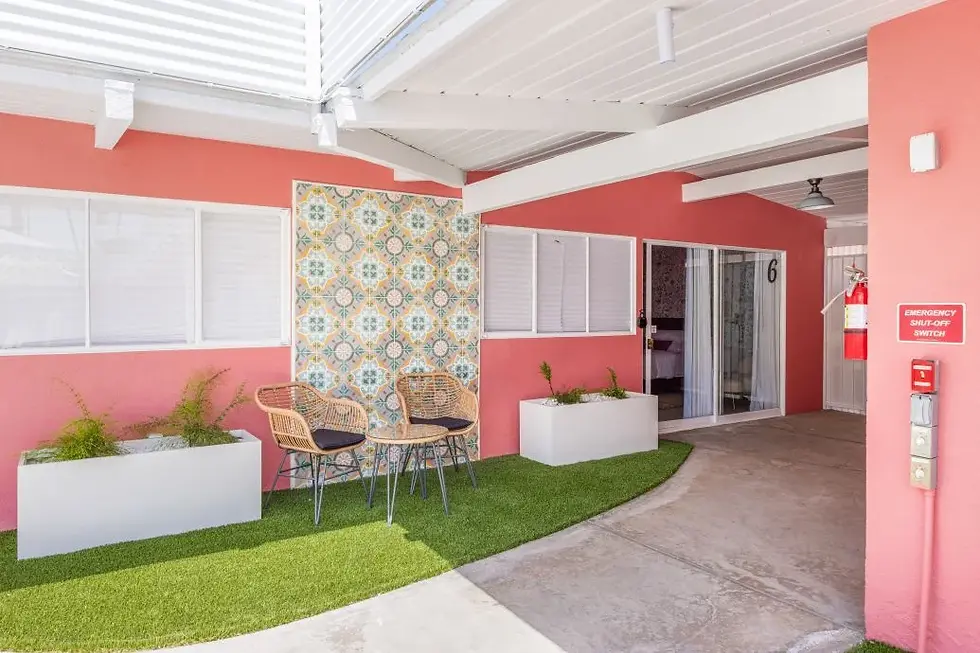
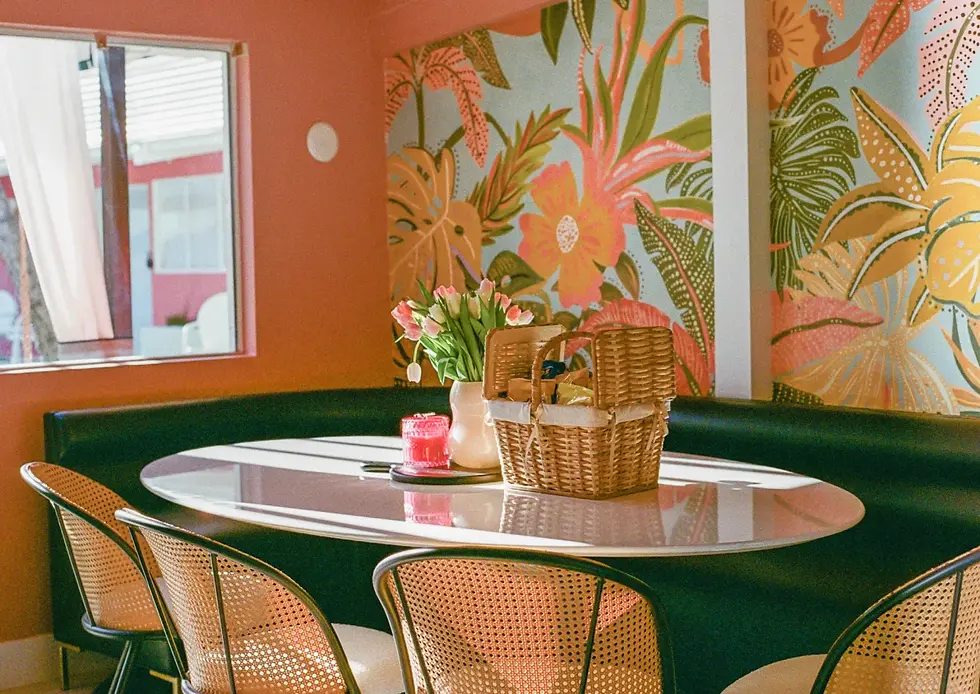
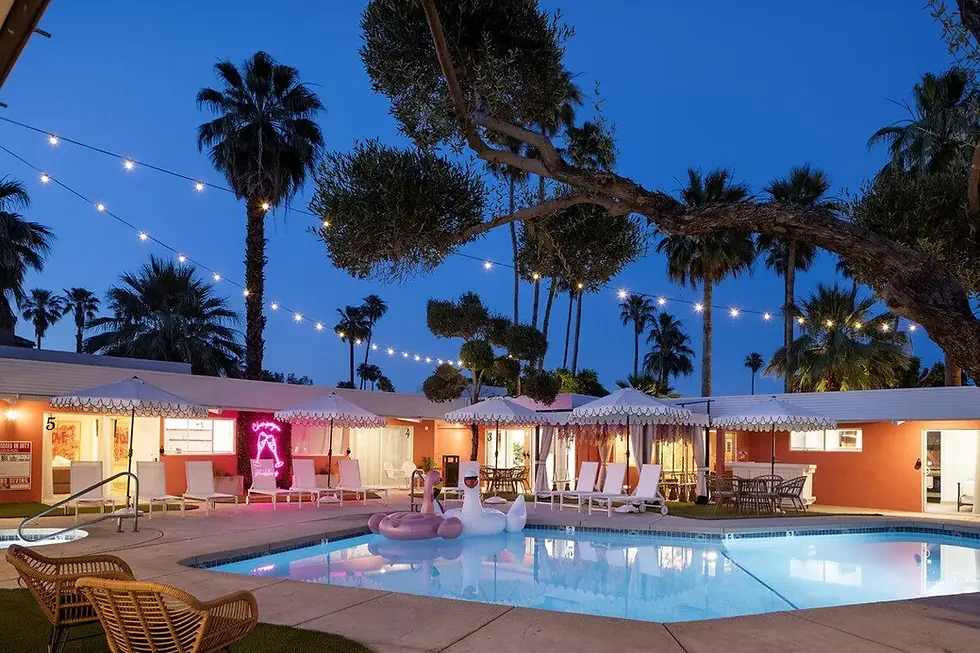
The Hotel Buyout at The Muse Hotel Palm Springs accommodates up to 21 guests across 10 bedrooms with a private pool, outdoor hot tub, and nine distinctively designed suites, making it one of the most accessible full-property buyout options in Palm Springs, California.
Planning lead times for boutique hotel buyouts typically run three to twelve months in advance, especially in high-demand markets like Palm Springs during Coachella and Stagecoach festival season in April.
How Does a Hotel Buyout Work?
A hotel buyout works by contracting with the property owner or general manager to reserve every available room for your group for a specified period, typically two to three nights minimum. Once the contract is signed and the deposit is paid, the hotel suspends all other reservations for those dates. Your group becomes the only guests on the property. Staff, amenities, pool access, and any on-site dining or bar service are dedicated exclusively to your event. Specifically, the hotel will often adapt menus, adjust operating hours, and in some cases allow custom branding or decor installations to match your event theme.
The process begins with a direct inquiry to the property, usually by phone or email, where you provide your group size, target dates, and a general description of the occasion. The hotel will then confirm whether those dates are available for an exclusive buyout and provide a rate sheet or proposal. Notably, boutique properties with 10 to 40 rooms are far more likely to accommodate full buyouts than larger hotels, where the revenue required to offset lost walk-in business makes the math prohibitive.
From there, the booking process moves through contract negotiation, deposit payment, and a detailed planning phase where you coordinate arrival logistics, any add-on services, and event-specific requests. For example, The Muse Hotel Buyout in Palm Springs allows groups of up to 21 guests to take over all nine suites across 10 bedrooms, with the heated courtyard pool, outdoor hot tub, and patio exclusively theirs for the duration of the stay. The hotel RFP process in corporate travel procurement follows a similar path, with formal proposals and contract terms reviewed by both parties before any deposit changes hands.

Hotel Buyout vs. Room Block: Which One Is Right for Your Event?
A hotel room block and a hotel buyout are two fundamentally different products. A room block is a reserved allocation of individual rooms, typically 10 to 30 rooms at a pre-negotiated rate, while other paying guests continue to occupy the rest of the hotel. A hotel buyout closes the entire property to everyone except your group. The distinction matters enormously for event planning, privacy, and budget.
Feature | Hotel Room Block | Full Hotel Buyout |
Other guests on property | Yes | No |
Minimum rooms | Typically 10 rooms | All available rooms |
Attrition requirement | 80 to 90% of block must be filled | Not applicable |
Customization | Limited to room preferences | Full property, menus, branding |
Privacy level | Shared with public | Complete exclusivity |
Best for group size | 10 to 100+ guests | Typically 10 to 50 guests |
Deposit required | Sometimes; call-in blocks often have none | Yes, typically significant |
According to celebrity wedding planner Stefanie Cove and Co., attrition clauses in contracted room blocks typically require organizers to fill 80 to 90 percent of reserved rooms or absorb the cost of unfilled inventory. A 30-room block can also come with a food and beverage minimum of $15,000 or more. For smaller groups of 15 to 21 people who want genuine privacy, a boutique hotel buyout often costs less than the financial exposure of a large room block with strict attrition terms.
The call-in block is a softer alternative worth knowing about. It requires no deposit and carries no attrition penalty, but the hotel releases unbooked rooms back to public inventory at a cut-off date, usually two to four weeks before the event. For group trips where some guests are likely to cancel or book separately, a call-in block reduces financial risk. But it also means you could end up with strangers in the next room on the night of your event.
What Are the Disadvantages of a Buyout?
The primary disadvantage of a hotel buyout is cost. Because you are reserving every room on the property regardless of whether all of them are occupied, you pay for vacant rooms as well as occupied ones. For smaller groups using a boutique hotel with 15 or 20 rooms, this means the per-person rate rises if your headcount does not come close to filling the property. Additionally, boutique hotel buyout contracts typically require a significant upfront deposit and a minimum stay of two to three nights, so the total financial commitment is higher and less flexible than an individual suite booking.
A second consideration is that full buyouts require more planning coordination. You become, in effect, the hotel's only client for those dates. The property's staff and operational schedule revolve around your group's needs, which is a benefit in terms of service but also means you need to communicate your group's arrival times, meal preferences, and activity plans clearly in advance. Gaps in communication translate directly into service gaps.
Third, not every boutique hotel is well-suited to every type of event. A property designed for romantic couples may not have the common-area capacity to seat 21 people for a group dinner. Confirm that the property's layout, dining capacity, and outdoor spaces match your actual event vision before signing. The full hotel buyout group rental at The Muse Hotel Palm Springs is specifically configured for group use, with a shared courtyard, outdoor dining area, and pool that work together as a cohesive social space rather than a series of disconnected private rooms.
Finally, availability is genuinely limited for popular dates. According to Visit Greater Palm Springs, convention bookings in 2026 hit their highest level since 2018, with more than 262,000 room nights booked across the region. In Palm Springs specifically, April dates during Coachella and Stagecoach festivals book out months in advance. If your event falls during peak season, plan to inquire at least six to twelve months ahead.

What Does a Hotel Buyout Actually Cost? (The Breakdown Competitors Skip)
Hotel buyout pricing refers to the total contracted cost for exclusive use of an entire property, which is calculated differently depending on property size, star rating, and geographic demand. Most boutique hotels price buyouts as a flat nightly rate that equals the full-occupancy room revenue the property would otherwise generate, plus food and beverage minimums and any event add-on fees. Understanding this structure helps you evaluate whether a buyout quote is reasonable before you negotiate.
For small boutique hotels with 10 to 20 rooms, pricing typically works as follows. The hotel calculates total room revenue at rack rate for the buyout period. For example, a 10-room boutique property at an average nightly rate of $300 per room generates $3,000 per night in full occupancy. A two-night buyout minimum would carry a base room cost of $6,000. Food and beverage minimums, cleaning fees, event setup costs, and gratuity are layered on top. In high-demand markets like Palm Springs, where the average daily rate for accommodations reached $472.90 in the short-term rental segment according to AirDNA's Palm Springs market overview, boutique hotel rates run higher, and buyout floor rates reflect that.
Larger corporate buyouts involve a different calculation. Volume tier discounts for corporate hotel rates apply when a group books a high number of room nights, sometimes reducing the effective per-room cost. Associated Luxury Hotels International (ALHI), the global sales organization that has handled hotel buyouts for nearly three decades, brokers these agreements for four- and five-star properties where the financial terms are considerably more complex. ALHI's former buyout of Chateau Elan Resort and Winery in Braselton, Georgia, a 275-room boutique resort, involved temporarily rebranding the entire property as "Chateau ALHI," which required signage changes and full staff rebriefs across every department.
For groups comparing costs practically: if your group of 18 would otherwise book six separate hotel rooms or vacation rentals across two properties, a boutique hotel buyout that consolidates everyone into one private property can cost the same or less per person, while delivering a level of exclusivity and service that split bookings cannot replicate. The Hotel Buyout at The Muse Hotel Palm Springs, which sleeps up to 21 guests across 10 bedrooms with a private pool and outdoor hot tub, is one of the more cost-accessible full-property buyout options in the Coachella Valley, specifically because its boutique scale keeps the base room cost manageable for a group of 15 to 21 people.
How to Negotiate a Hotel Buyout Contract: What Most Guides Miss
Hotel buyout contract negotiation refers to the process of reviewing and modifying the terms of a full-property exclusive rental agreement before signing, covering deposit structure, cancellation policy, food and beverage minimums, force majeure clauses, and liability provisions. Most guides cover what a buyout is but stop before explaining how to protect yourself in the contract. These are the clauses that matter.
Deposit Structure and Payment Schedule
Most boutique hotel buyout contracts require a deposit of 25 to 50 percent of the total estimated cost at signing, with the remainder due 30 to 90 days before arrival. Negotiate the payment schedule so that a larger portion of the final payment is due closer to the event date. This protects you if your group size changes significantly in the months between booking and arrival.
Cancellation and Force Majeure
Cancellation clauses in buyout contracts typically follow a sliding scale: you lose a percentage of your deposit depending on how far in advance you cancel. Ask specifically about the force majeure provision, which governs cancellations due to circumstances outside your control. Many hotels tightened these clauses significantly after 2020. Confirm whether natural disasters, extreme weather events, and public health emergencies are included. In Palm Springs, extreme summer heat occasionally affects outdoor event plans, so having flexibility in force majeure language matters.
Food and Beverage Minimums
Many boutique hotel buyout contracts include a food and beverage minimum separate from room revenue. Clarify exactly what counts toward that minimum: room service, poolside snacks, a private hibachi dinner, or a mobile bar service. At The Muse Hotel Palm Springs, add-on experiences like a private hibachi dinner or a mobile bar with a twist can be factored into the event budget and may count toward minimums depending on how the contract is structured. Confirm this before you sign.
Liability and Insurance
For events with alcohol service, large groups, or any planned entertainment, confirm what liability coverage the hotel carries and whether you are expected to provide supplemental event insurance. Some boutique properties require event organizers to carry a one-day liability policy for groups above a certain size. These policies are typically inexpensive and widely available, but you want to know about this requirement before you arrive, not the morning of your event.
What Occasions Work Best for a Full Hotel Buyout?
A hotel buyout works best for private events where exclusivity, group cohesion, and customized ambiance are central to the experience rather than optional extras. The most common occasions include bachelorette parties, destination weddings, milestone birthday weekends, corporate offsites, women's wellness retreats, and family reunion gatherings at boutique properties.
Bachelorette parties and girls' weekend groups are among the strongest fit for boutique buyouts, particularly in markets like Palm Springs. The logic is straightforward: the group wants to feel like the property is theirs, the pool is theirs, and the energy of the weekend belongs entirely to the people celebrating. Sharing a pool deck with other hotel guests on the most important morning of a bachelorette weekend is the kind of friction that a buyout eliminates entirely. Venues like the Vanderbilt Grace in Newport, Rhode Island, a historic 33-room property, averages four wedding buyouts per year precisely because the experience of having an entire property is irreplaceable for celebration-focused events.
Corporate offsites and retreat groups benefit from buyouts because the entire property becomes a dedicated meeting and relaxation environment. Yoga at The Muse and in-room spa services can be scheduled without competing with other guests for timing or space. For wellness retreat organizers, the yoga bachelorette experience is a specific add-on that integrates movement and relaxation directly into the buyout package.
Celebrity events have long validated the buyout model at the ultra-luxury end. Tiger Woods reserved the five-star Sandy Lane in Barbados for his 2004 wedding. Angelina Jolie booked out Amansara in Siem Reap in 2011. While the scale differs, the underlying logic is identical: exclusive access, complete control, no strangers at breakfast. In 2026, that same logic applies just as cleanly to a 20-person bachelorette weekend at a boutique hotel in Palm Springs as it did to a Hollywood celebrity at an Aman resort.
Hybrid Buyouts and Partial-Property Options: A Scenario Competitors Ignore
A hybrid hotel buyout refers to an arrangement where a group reserves a specific floor, wing, or set of amenity spaces rather than the entire property. This option is less commonly discussed but is practically useful for groups of 8 to 14 people who want greater privacy than a room block provides but whose headcount does not justify reserving every room in the building.
Specifically, some boutique properties will agree to cluster a group's rooms on one side of the property, restrict access to a shared pool during designated hours, or hold a private dining space exclusively for the group even while other guests remain in different sections of the hotel. This middle-ground approach is worth asking about, especially for smaller groups or events with a tighter budget.
At truly small boutique properties like the Washington School House in Park City, Utah, a 12-room hotel housed in an 1880s schoolhouse, the full buyout and the partial arrangement converge because the property is small enough that a group of 12 effectively achieves full-property privacy anyway. The Palm Springs hotel model at The Muse Hotel Palm Springs operates similarly: with nine named suites and 10 bedrooms, groups of 12 to 14 guests who book six or seven suites will find the courtyard and pool feel naturally private even without a formal full buyout designation.
For event planners navigating group sizes between 10 and 15, the practical decision framework looks like this. First, determine how many rooms your group actually needs. Second, confirm whether the property will guarantee room clustering or designated amenity hours for a partial reservation. Third, compare that cost against the full buyout quote. Often the gap is smaller than expected because boutique hotels price full buyouts conservatively to avoid negotiation friction. The CWT Hotel Sourcing eBook covers volume negotiation benchmarks that apply to this comparison, particularly for corporate and group travel planning.
Decision Framework: Buyout, Room Block, or Individual Suites?
Choosing between a hotel buyout, a room block, and individual suite bookings requires matching your group's size, budget, privacy expectations, and planning capacity to the right product. Use the following decision framework before you reach out to any property.
Count your confirmed guests first. Room blocks work efficiently for groups of 20 to 100 where only some attendees need accommodation at the same property. Buyouts work best when your core group is 10 to 21 people and you want everyone under one roof with no outsiders present.
Decide how important exclusivity is. If sharing a pool or lobby with other hotel guests does not affect your event, a room block is cheaper and simpler. If the experience depends on private access to shared spaces, a buyout is the right product.
Assess your planning capacity. Buyouts require more upfront coordination: contract review, deposit management, event logistics, and direct communication with the property. Room blocks are more passive. Be honest about how much organizational bandwidth your group has.
Compare the total financial commitment. Add up attrition risk for a room block (80 to 90 percent fill rate required) against the flat commitment of a buyout. For smaller groups with uncertain headcounts, buyout pricing sometimes carries less financial risk than a contracted block with penalties.
Check the property's event infrastructure. A hotel that frequently accommodates buyouts will have clearer processes, known add-on vendors, and staff experienced with event coordination. Ask how many buyouts they handle per year and whether they have a dedicated event contact.
Consider the date and market conditions. Palm Springs visitor spending averages $1.9 billion annually and hotel demand spikes sharply during April festival season, according to data from The Palm Springs Post. If your event falls within this window, availability for quality boutique properties narrows fast, and buyout pricing may rise accordingly.
Frequently Asked Questions About Hotel Buyouts
What is a hotel buyout and how does it work for private events?
A hotel buyout is the exclusive reservation of an entire hotel property for one group, closing the property to all other guests for the duration of the event. Every room, pool, lounge, restaurant, and amenity space is dedicated solely to your group. The process works by contracting directly with the property owner, paying a deposit, and coordinating arrival logistics, event add-ons, and any custom branding or decor with the hotel's event contact. Minimum stays are typically two to three nights.
How does a hotel buyout differ from a room block?
A room block reserves a specific number of rooms at a pre-negotiated rate while other guests continue to occupy the rest of the hotel. A hotel buyout closes the entire property to outside guests, giving your group complete privacy and exclusive use of all amenities. Room blocks typically require 10 to 30 rooms minimum and carry attrition clauses requiring 80 to 90 percent occupancy, or the organizer pays for unfilled rooms. Buyouts eliminate attrition risk but require reserving all available rooms regardless of how many your group actually occupies.
How far in advance should I book a boutique hotel buyout in Palm Springs?
Plan to inquire at least six to twelve months in advance for Palm Springs boutique buyouts, and closer to twelve months if your event falls in April during Coachella or Stagecoach festival season. Visit Greater Palm Springs reported that convention and group bookings in 2026 hit their highest level since 2018, with more than 262,000 room nights booked across the region. Boutique properties with under 20 rooms have limited inventory and book out quickly for weekends between January and May.
What contract clauses should I review before signing a hotel buyout agreement?
Review the deposit payment schedule, cancellation penalty timeline, force majeure provision, food and beverage minimum requirements, and liability insurance expectations before signing. Specifically confirm whether extreme weather, public health events, or natural disasters are covered under force majeure. Ask what counts toward food and beverage minimums so you can plan add-on services strategically and avoid unexpected shortfalls.
What occasions are hotel buyouts best suited for?
Hotel buyouts work best for events where group exclusivity and private access to shared amenities are central to the experience: bachelorette parties, destination weddings, milestone birthdays, corporate offsites, women's wellness retreats, and reunion weekends. Boutique properties with 10 to 40 rooms are the most common buyout settings because their scale makes full-property pricing accessible and their design character typically reflects a deliberate aesthetic that enhances the event atmosphere.
How does The Muse Hotel Palm Springs hotel buyout work?
The Hotel Buyout at The Muse Hotel Palm Springs reserves all nine suites across 10 bedrooms for your group, accommodating up to 21 guests with exclusive access to the heated courtyard pool, outdoor hot tub, outdoor dining area, fireplace, and patio spaces. The property is located 2.1 miles from downtown Palm Springs, about a five-minute drive along South Palm Canyon Drive, in the Warm Sands neighborhood. Groups can add on private hibachi dinners, in-room spa services, yoga sessions, and other curated experiences through the hotel's add-on menu. Booking details and availability are at themusehotelpalmsprings.com.
Can I do a partial hotel buyout if my group is smaller than the property's full capacity?
Yes. Some boutique properties will arrange hybrid buyouts that cluster a group's rooms on one side of the property or reserve amenity access during designated hours, even without a full-property exclusive. Ask the hotel's event contact about room clustering options and designated pool access windows. For properties with 10 to 15 rooms, a group booking six or seven suites may achieve practical privacy without requiring a formal full-buyout contract, which can reduce total cost while preserving most of the exclusivity benefit.
Planning Your Hotel Buyout: The Practical Checklist
Once you decide a hotel buyout is the right product for your event, execution comes down to a clear sequence of steps. Use this checklist to move from inquiry to confirmed booking without gaps.
Confirm your guest count and target dates before reaching out to any property. Buyout quotes depend on both, and vague inquiries delay responses.
Identify two or three boutique properties that fit your group size, aesthetic, and location needs. Focus on properties with 10 to 40 rooms in your target market.
Request a full buyout proposal from each property, specifying your dates, group size, and event type. Ask for a breakdown of room costs, food and beverage minimums, and any required deposits.
Review the contract with all five critical clauses in mind: deposit schedule, cancellation terms, force majeure coverage, food and beverage minimums, and liability expectations.
Confirm the property's event infrastructure: Does the property have a dedicated event contact? How many buyouts do they handle per year? What add-on services are available and which vendors are approved?
Coordinate arrival logistics with the hotel at least three to four weeks before the event. Confirm check-in windows, parking access, luggage storage for early arrivers, and any pre-arrival room setup requests.
Book add-on experiences early. In-demand add-ons like glam squad services, in-room massage and spa services, and custom event setups have limited availability on popular dates. Reserve them alongside the property, not as an afterthought.
Communicate your event timeline to the hotel staff at least one week in advance: expected arrival times for each guest, any planned group activities on property, meal timing preferences, and checkout logistics.
Is a Hotel Buyout Worth It? The Honest Assessment
A hotel buyout is worth the premium when the experience your group wants genuinely requires privacy, when the alternative is splitting your group across two or three different properties, or when the shared amenity spaces like a pool or courtyard are central to the event and you cannot afford to share them with strangers.
It is not worth it when your group is small relative to the property's capacity and the per-person cost becomes difficult to justify, or when the event is primarily about external activities where the hotel serves only as a place to sleep. For a bachelorette group of 18 to 21 people who will spend significant time on a pool deck or gathered in a courtyard, the premium over individual suite bookings is relatively modest, and the experience difference is substantial.
The bachelorette party Palm Springs planning page at The Muse Hotel Palm Springs outlines exactly what the buyout experience delivers for celebration groups. The property's Warm Sands neighborhood location puts guests 2.1 miles from downtown Palm Springs, which means the proximity to Palm Canyon Drive dining and nightlife is practical without placing the property in the middle of the weekend foot traffic. For groups who want easy access to Rooster and the Pig, named USA Today's Restaurant of the Year in 2026 per Desert Sun coverage, or a reservation at Workshop Kitchen and Bar, one of Palm Springs' Michelin-recognized fine dining destinations, the five-minute drive from The Muse Hotel Palm Springs makes both easily achievable without staying in the thick of downtown noise.
Palm Springs rewards deliberate planning. The destination generates $1.9 billion in annual visitor spending, supports tourism that accounts for one in four regional jobs according to Visit Greater Palm Springs, and continues to attract new air service including nonstop routes from New York as of 2026. The market is not slowing down, and boutique buyout inventory is genuinely limited. If the occasion matters, the planning should match it.

If you are planning a private event and want to understand whether a full hotel buyout is the right structure for your group, The Muse Hotel Buyout in Palm Springs is one of the most logistically clean examples of what the product actually delivers. Nine uniquely designed suites across 10 bedrooms, a private courtyard pool and outdoor hot tub, and a location 1.8 miles from the Palm Springs Convention Center and 2.1 miles from downtown give groups of up to 21 guests everything they need in one place, with nothing they did not ask for. For availability, current pricing, and event planning details, visit the booking page directly.

Comments