%20(1).png)
%20(1).png)
How to Negotiate Group Hotel Rates (and Actually Get a Deal)


If you want to know how to negotiate group hotel rates, the core process is this: contact a hotel's sales team directly, present your group's size and spending power, and use competing bids to drive down the room block price. Most hotels will discount 10-25% off their best available rate for groups booking 10 or more rooms, and the savings grow significantly when you negotiate attrition clauses, comp rooms, and fee waivers alongside the base rate.
Hotels typically offer group rate discounts of 10-15% for groups booking 100-150 room nights, rising to 20-30% for groups booking 1,000+ room nights annually, according to Corporate Traveler industry benchmarks.
The most effective negotiation window is 6-12 months before your event date, when hotels have the most flexibility and the strongest incentive to fill their calendar.
Attrition clauses, comp room ratios, resort fee waivers, and meeting space fees are all negotiable, not just the base room rate.
Platforms like GroupSync, GroupTravel.org, and Engine give smaller groups negotiating leverage by aggregating bids from multiple hotels simultaneously.
Independent boutique hotels often offer more flexibility on contract terms than major chains, making them a strong option for groups that want a distinctive experience alongside a negotiable rate.
Never answer the question "What is your budget?" during a hotel negotiation. Respond that the budget is still being finalized and redirect to the hotel's best offer first.
TL;DR
Group hotel negotiation is available to any group booking 10+ rooms, not just large corporate accounts.
The five most valuable items to negotiate are: room rate, attrition clause, comp room ratio, resort fees, and meeting space fees.
Competing bids are your single most powerful piece of leverage. Get at least three proposals before committing.
Start the conversation 6-12 months out. Waiting until 60 days before your event date costs you leverage.
Independent hotels and boutique properties often negotiate faster and offer more creative concessions than large chains.
Group travel planning is more complex in 2026 than it was five years ago. Hotel rates in high-demand markets have climbed, attrition clauses have tightened post-pandemic, and the gap between the rate a hotel publishes online and the rate a prepared group negotiator can secure has widened. The groups that arrive at the negotiating table with competing bids, clear data on their room pickup history, and a willingness to walk away consistently outperform those who email one hotel and accept the first offer.
This guide covers the full negotiation process from pre-research through contract signing. You will find specific talking points, real savings benchmarks, and a step-by-step framework for groups of all sizes, including smaller gatherings of 10-30 rooms that most other guides ignore entirely. Whether you are coordinating a bachelorette party in Palm Springs, a corporate offsite, or a multi-day conference, the same core principles apply.
One note before we get into the tactics: independent boutique properties like The Muse Hotel Palm Springs operate outside the chain hotel sales playbook. They have more pricing flexibility, faster decision-making, and a genuine interest in filling their calendar with the right group. For groups of 10-21 guests looking for a private, curated experience, a boutique buyout negotiation often delivers better value per dollar than a standard room block at a brand hotel: and the same negotiation principles covered in this guide apply directly. We will cover both pathways throughout.
Do Hotels Give Discounts for Large Groups?
Hotels give discounts for large groups as a standard business practice, with the discount percentage tied directly to the number of room nights your group will generate. Most hotels begin offering group rate discounts at 10 or more rooms per night, with meaningful savings starting at around 10-15% off the best available rate (BAR). According to volume tier discount data from Corporate Traveler, groups generating 100-150 room nights annually can expect 10-15% discounts, while those reaching 300-500 room nights see 15-20% savings, and accounts above 1,000 annual room nights can negotiate 20-30% reductions.
For one-time group events rather than ongoing corporate accounts, the thresholds work differently. A wedding room block of 25 rooms for two nights generates 50 room nights, which is enough leverage to negotiate meaningfully at most secondary market hotels. A bachelorette group booking 9 suites for three nights is a genuine commercial opportunity for a boutique property. Do not assume you need hundreds of rooms to start a negotiation.
The key variable is how much the hotel needs your business at the time you are booking. Hotels in slower periods or with open calendar dates will negotiate aggressively. Hotels in peak season with high baseline occupancy will offer smaller discounts but may still concede on fee waivers, comp rooms, and attrition flexibility. Understanding this dynamic before you pick up the phone is the foundation of effective negotiation.

When Does Negotiating Group Hotel Rates Actually Make Sense?
Negotiating group hotel rates makes sense for any booking of 10 or more rooms per night, any event requiring meeting space, or any stay where the group's total spend including food, beverage, and ancillary services exceeds $5,000. Below 10 rooms, you are better served by loyalty program discounts or rate match guarantees than by a formal group negotiation. Above 10 rooms, you have real leverage and should use it.
The ROI calculation is straightforward. If your group of 20 people is booking 3 nights at an average rate of $200 per night, your baseline spend is $12,000 in room revenue alone. A 15% discount saves $1,800. A 20% discount saves $2,400. Add a waived resort fee of $35 per room per night and your savings climb by another $2,100. Negotiating comp rooms at a 1:20 ratio instead of the standard 1:30 gets you one free room versus zero. Total potential savings on a mid-size group booking can easily reach $4,000-6,000 without heroic effort.
For smaller gatherings, specifically groups of 10-30 rooms that most guides ignore, the negotiation looks different but remains worthwhile. You are unlikely to trigger a formal Request for Proposal (RFP) process or access the corporate tier discount structure. Instead, you are negotiating directly with a hotel's sales manager on a one-event basis. Your leverage comes from competing bids, the totality of your group's spend, and the hotel's need to fill specific dates. Independent and boutique properties are particularly receptive to this kind of direct conversation.
What Is the Best Timeline to Start Negotiating?
The optimal window to begin negotiating group hotel rates is 6-12 months before your event date for most markets, and 12-18 months for peak season events in high-demand destinations like Palm Springs during Coachella and Stagecoach festival periods in April. Starting early gives you maximum flexibility on dates and rooms, the most competing bids to compare, and the best chance of securing favorable attrition and cancellation terms before the hotel's inventory fills.
Here is how the timeline affects your leverage at each stage:
12+ months out: Maximum flexibility. Hotels are eager to lock in future revenue and will offer their most favorable terms on attrition, cancellation, and comp rooms. This window is essential for April events in Palm Springs or any high-demand festival period.
6-12 months out: Strong leverage for most markets and event types. Enough lead time to collect three or more competing bids. The formal hotel RFP process in corporate travel procurement is most effective in this window.
3-6 months out: Moderate leverage. Some hotels will be close to full for your dates. The best properties may be unavailable, and attrition terms will be less flexible. Focus on hotels with clearly open inventory.
Under 60 days out: Distress pricing territory. Hotels with unsold inventory may offer steep last-minute discounts, but you lose all negotiating power on contract terms. Only accept this approach if your dates are truly flexible.
For bachelorette groups and girls trip planners in Palm Springs specifically: April, October, and holiday weekends book out 6-9 months in advance at boutique properties. If you want exclusive access to a property like the Hotel Buyout at The Muse Hotel Palm Springs, which accommodates up to 21 guests across 10 bedrooms with a private pool and hot tub, planning 6 months ahead is not cautious, it is realistic.
What Are the 5 C's of Negotiation?
The 5 C's of negotiation are a framework covering Clarity, Credibility, Competition, Concessions, and Contract. Applied to hotel group rate negotiations, each element maps directly to a specific tactic that moves a hotel sales director toward a better offer. Understanding all five prevents the most common mistake groups make, which is negotiating on price alone while leaving significant value on the table in contract terms.
Clarity means knowing exactly what your group needs before you contact the first hotel. Room count, night pattern, check-in and checkout dates, any meeting space requirements, food and beverage expectations, and the total approximate spend your group will generate. A sales manager who receives a vague inquiry responds with a vague quote. Specific information produces specific, negotiable proposals.
Credibility means demonstrating that your group is a reliable buyer. Provide your group's room pickup history from previous events, reference letters from prior hotel partners, or simply the name of the organization coordinating the event. Hotels negotiate harder for groups with a track record of honoring their room block commitments.
Competition is your single most powerful lever. Collect at least three competing bids before you negotiate with any hotel. When a sales manager knows you have proposals from two comparable properties on the same dates, your negotiating position transforms immediately. Platforms like Groups360 and GroupTravel.org allow you to submit a single inquiry and receive competing bids from multiple hotels at once.
Concessions refers to your willingness to trade something of value for a rate reduction. Offering a shortened cancellation window, a higher deposit, a food and beverage commitment, or a preferred booking pattern in exchange for a lower room rate is a legitimate and effective tactic. Hotels respond well to negotiators who understand that both sides are making trade-offs.
Contract means getting everything in writing before you sign. Verbal promises from a sales manager are worthless if they are not reflected in the group contract. This applies to comp room ratios, resort fee waivers, complimentary meeting space, and any rate adjustment clauses you negotiated verbally.
What Is the 70/30 Rule in Negotiation?
The 70/30 rule in negotiation refers to the principle that effective negotiators spend 70% of their time listening and only 30% of the time speaking. In a hotel group rate negotiation specifically, this means asking the hotel sales director open questions about their available dates, their group booking calendar, their current occupancy forecasts, and what concessions they have flexibility on, then listening carefully to what they reveal. The information gathered in that listening phase is what you use to negotiate strategically.
In practice, applying the 70/30 rule reveals the hotel's "need dates," the periods when the property has low occupancy and the highest motivation to fill rooms. A hotel sales manager who mentions that "mid-week in November tends to be quieter" has just told you that a Tuesday through Thursday booking in November carries significantly more negotiating leverage than a Friday through Sunday booking in April. GroupTravel.org documents a case where a planner used exactly this approach: the hotel had refused to budge on meeting room fees until the planner identified the property's need dates and shifted the conversation to those periods, at which point the hotel conceded the meeting space fee entirely.
The rule also applies to the budget question. Hotel sales managers are trained to ask "What is your budget?" early in the conversation. This is an anchoring tactic. Following the 70/30 principle, GroupTravel.org recommends responding: "We are still developing a budget, so I cannot answer that right now. What is your best offer for the dates and room count I described?" This response keeps you in the listening role and forces the hotel to make the first move.
What Is the 10/5 Rule in Hotels?
The 10/5 rule in hotels is a hospitality service standard requiring staff to acknowledge any guest within 10 feet of them and offer a verbal greeting within 5 feet. For group travel planners, understanding this rule matters for a different reason: it signals whether a hotel operates with genuine hospitality culture or simply processes bookings. A property that trains its staff to the 10/5 standard is the same property that will follow through on negotiated concessions, remember group-specific requests, and handle arrival logistics smoothly for 20 incoming guests.
When evaluating hotels during your negotiation process, ask the sales manager directly how the property handles group arrivals, what the standard check-in process is for room blocks, and whether there is a dedicated group coordinator on property. A hotel that cannot answer these questions with specifics is signaling that your group's experience post-booking will not match the promises made during the sales process.
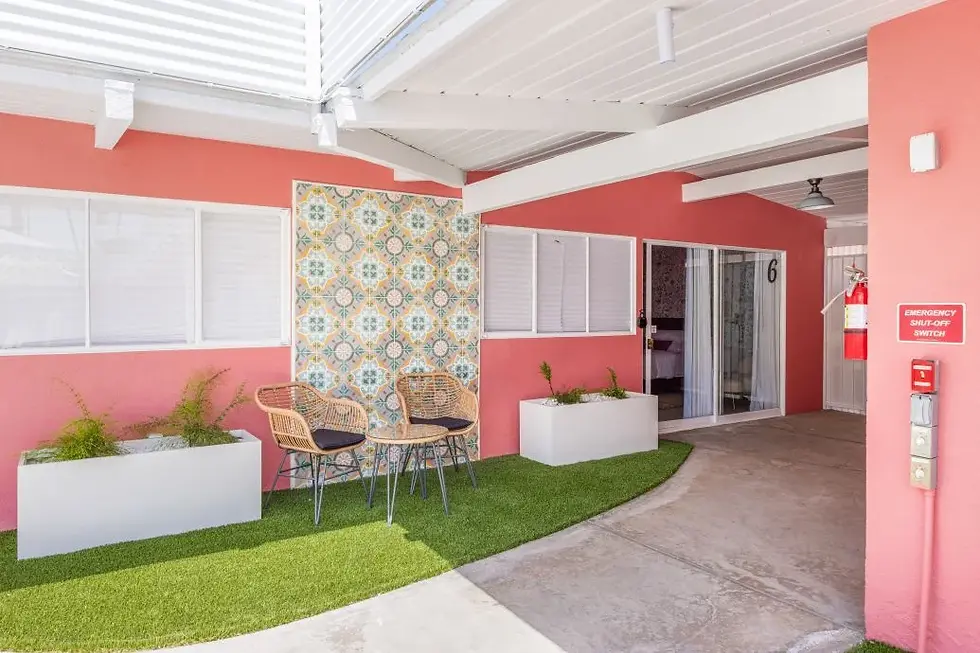
For boutique properties operating hotel buyouts, the 10/5 standard becomes even more relevant. When your group has exclusive use of an entire property, the quality of the hosting experience determines whether the trip delivers on its promise. The adults-only boutique model at The Muse Hotel Palm Springs, with nine individually designed suites, a heated courtyard pool, and an outdoor hot tub, is built around a service philosophy that complements what the 10/5 standard represents: the difference between a hotel that sells rooms and one that hosts guests. That distinction matters especially for bachelorette groups and celebration weekends where the experience quality is the point.
How to Build Your Pre-Negotiation Research File
Pre-negotiation research for group hotel rates means assembling a competitive analysis file before you contact your first hotel. This file includes your group's profile, the market rates for comparable properties on your dates, and a list of at least three target hotels ranked by preference. Groups that arrive at the negotiation with this file move faster, receive better proposals, and avoid the single most common mistake in group booking: accepting the first offer because they have no basis for comparison.
Build your research file in four steps:
Define your group profile precisely. Total rooms needed per night, the exact night pattern, total expected room nights (rooms x nights), any meeting space or event space requirements, estimated food and beverage spend, and any special room configurations needed. The more specific your profile, the more accurate the proposals you receive.
Research the market rate for your dates. Check the hotel's best available rate on their website and on third-party booking platforms for your specific dates. Note any rate fluctuations between weekdays and weekends. This is your baseline, and it tells you how much room the hotel has to move.
Identify need dates. Use occupancy data from sources like AirDNA for the broader market, or simply observe which dates have the most hotel availability on booking platforms. Dates with many open rooms signal lower occupancy and higher negotiating leverage.
Collect competing bids simultaneously. Submit your group profile to three or more hotels at the same time using a platform like GroupSync or by contacting each property's sales department directly. According to GroupTravel.org, using a competitive bid system yields an average savings of 22% compared to single-property negotiations. The CWT Hotel Sourcing eBook provides a detailed framework for structuring these simultaneous RFP submissions.
How Do You Actually Negotiate Group Hotel Rates Step by Step?
Negotiating group hotel rates follows a six-step process: submit your group profile to multiple hotels simultaneously, evaluate the competing proposals side by side, identify the best base offer, negotiate contract terms beyond the room rate, request everything in writing, and confirm final terms before signing. This process applies whether you are booking 10 rooms at a boutique property or 200 rooms at a convention hotel, though the timeline and formality differ by scale.
Step 1: Submit Your Group Profile as a Formal RFP
A Request for Proposal (RFP) for group hotel rates is a document that describes your group's needs and invites the hotel to respond with a formal offer. Include: your organization name, event dates, room count per night, room type preferences, any meeting space requirements, food and beverage expectations, and your decision timeline. Send this to all target hotels on the same day so each property knows it is in a competitive process. Hotels respond faster and more aggressively when they know other properties are bidding.
Step 2: Evaluate Proposals Side by Side
Compare proposals across six dimensions: base room rate versus the hotel's published BAR, attrition clause percentage, comp room ratio, resort and amenity fee treatment, cancellation policy flexibility, and any included concessions like complimentary meeting space or welcome amenity. Groups360 recommends building a simple comparison table for this step so no variable gets overlooked in the excitement of receiving a competitive offer.
Step 3: Negotiate the Room Rate with Competing Leverage
Go back to your top two preferred hotels with the strongest competing offer in hand. State directly: "We have received a proposal from a comparable property at [rate]. We prefer your hotel for [specific reason], but we need you to match or improve on that offer to move forward." This is not confrontational, it is the standard language of commercial negotiation, and most hotel sales directors respond to it professionally.
Step 4: Negotiate Contract Terms Beyond the Room Rate
Once the base rate is agreed, address attrition, comp rooms, and fees. Request an attrition allowance of 20% instead of the standard 10%, which Groups360 specifically recommends for groups with uncertain pickup. Negotiate the comp room ratio from 1:30 to 1:20. Request a rate re-check clause guaranteeing you will not pay more than the lowest public rate available at any point before your event. Ask for resort fees to be included in the negotiated rate rather than added at checkout.
Step 5: Address Cancellation and Force Majeure Language
Cancellation policies in group contracts carry significant financial exposure. Negotiate a sliding scale cancellation fee rather than a flat penalty: for example, 25% of estimated revenue if cancelled 180+ days out, 50% at 90-180 days, and full penalty inside 90 days. Request explicit force majeure language covering circumstances beyond your group's control. Get these terms into the contract body, not a side letter that may not be honored by a new sales manager.
Step 6: Confirm Everything in Writing Before Signing
Every concession negotiated verbally must appear in the signed contract. Review the final document against your negotiation notes line by line. Verbal promises about complimentary parking, welcome receptions, or room upgrades are worth nothing unless they appear in the contract. Sign only when the written document reflects the agreed terms completely.
What Are Attrition Clauses and How Do You Negotiate Them?
An attrition clause in a group hotel contract is a provision requiring the group to pay a penalty if their actual room pickup falls below a specified percentage of the contracted room block. Standard attrition clauses require groups to fill 80-90% of their contracted rooms or pay for the shortfall at the negotiated rate. For groups with any uncertainty in attendance, negotiating the attrition percentage down and adding a resale clause is one of the highest-value items on the contract negotiation checklist.
To make the dollar exposure concrete: if you contracted 50 rooms at $220 per night with a standard 90% attrition clause and only 40 rooms were occupied, you owe the hotel for 5 shortfall rooms at $220 each: a $1,100 penalty for a single night, or $3,300 over a three-night event. Negotiate that same scenario to an 80% attrition threshold and you owe nothing, because 40 rooms out of 50 is exactly 80%. That single clause change eliminates a potential $3,300 liability before you arrive.
The key negotiation tactics for attrition clauses in 2026 are:
Request 20% attrition instead of 10%. This means you only need to fill 80% of your block instead of 90% before penalties apply. For a group of 50 rooms, this difference means you can have 10 no-shows instead of 5 before incurring charges.
Negotiate a resale clause. This provision specifies that if the hotel resells any rooms from your unfilled block to other guests, those resold rooms count against your attrition obligation. Groups360 explicitly recommends including this clause because it protects you from paying for rooms the hotel successfully sold to someone else.
Use GroupSync to track room pickup in real time. Groups360 recommends this approach to identify early if your block is underperforming so you can renegotiate mid-cycle rather than discovering a shortfall at checkout.
Propose a reduced block size with an option to add rooms. Contract for 80% of your expected attendance and negotiate the right to add rooms at the same rate if pickup exceeds expectations. This shifts the attrition risk without sacrificing capacity flexibility.

What Else Can You Negotiate Beyond the Room Rate?
Beyond the base room rate, group hotel contracts offer at least seven additional categories of negotiable value, many of which competing groups overlook entirely. Experienced meeting planners and group travel coordinators treat the room rate as just one line item in a larger negotiation. The total value of non-rate concessions routinely equals or exceeds the savings from the room rate discount itself.
Negotiable Item | Standard Position | Target Position | Typical Outcome |
Comp room ratio | 1 free per 30 paid | 1 free per 20 paid | Achievable with 30+ rooms |
Resort / amenity fees | Added at checkout per room per night | Waived or included in rate | Often waived for large blocks |
Meeting space rental | Charged separately | Complimentary with F&B minimum | Frequently conceded on need dates |
Food & beverage minimum | Set at hotel's standard | Reduced or credited toward rooms | Negotiable with competing bids |
Parking fees | Charged per vehicle per night | Complimentary or group rate | Variable by property |
Wi-Fi charges | Per room per night | Included for group rooms | Commonly included |
Staff / VIP rooms | Charged at group rate | Complimentary or heavily discounted | Negotiable based on block size |
Food and beverage is particularly worth targeting because hotels treat F&B revenue as partially offsetting room rate discounts. If your group is committing to a group dinner, welcome reception, or daily breakfast, quantify that commitment in writing and use it as leverage. A planner who says "our group will spend approximately $4,000 on food and beverage over the two-day event" has just created a negotiating chip that many sales directors will trade for a deeper room rate discount or complimentary meeting space.
How Do You Negotiate with Independent Hotels Versus Chain Hotels?
Negotiating with independent boutique hotels and negotiating with major chain hotels like Marriott or Hilton require fundamentally different approaches because the decision-making structure, pricing flexibility, and loyalty program dynamics differ significantly between the two. Independent hotels often offer faster decisions and more creative concessions; chain hotels offer loyalty point accrual, standardized contract protections, and volume-based corporate programs like Marriott Bonvoy Events, Hilton Honors Planner Points, and IHG Business Rewards.
Negotiating with Major Hotel Chains
Chain hotel negotiations run through a regional or national group sales department with standardized contract templates and limited individual property flexibility. The advantage is predictability: Marriott's group contract structure is the same in every market, loyalty points are accrued consistently, and escalation pathways are clear when a negotiation stalls. The disadvantage is that chain properties below a certain volume threshold (typically 150-250 room nights annually, per the formal corporate sourcing process) may not engage seriously with one-time group negotiations. For one-time events, approach the property's on-site sales manager directly rather than the central reservations system.
Negotiating with Independent and Boutique Hotels
Independent properties offer negotiating advantages that chains structurally cannot match. The owner or general manager often makes pricing decisions directly, which means a motivated negotiator can reach a decision-maker in a single phone call rather than navigating a regional approval chain. Contract terms at independent properties are more flexible because they are not constrained by brand standards. And boutique properties in markets like Palm Springs hotels have a genuine business incentive to fill their calendar with well-matched groups rather than optimizing solely on rate.
For groups of 10-21 guests considering a full property buyout at an adults-only boutique hotel, the negotiation dynamics are straightforward. You are offering the property guaranteed occupancy across all rooms for your dates, which eliminates the hotel's unsold room risk entirely. That certainty is worth something, and most independent operators will reflect it in their pricing. The full hotel buyout option at The Muse Hotel Palm Springs, for example, gives groups of up to 21 guests exclusive access to all nine suites, the private pool, and the outdoor hot tub, making the per-person cost calculation considerably more favorable than booking comparable individual rooms at separate properties.
What Are the Most Common Group Negotiation Mistakes?
The most common mistakes groups make when negotiating hotel rates fall into five categories, and each one is avoidable with basic preparation. Groups that make these errors consistently pay 10-20% more than they would with a disciplined approach, and some end up with unfavorable contract terms that cost them even more at checkout.
Mistake 1: Revealing your budget first. Hotel sales managers are trained to ask about budget early. Answering with a specific number anchors the entire negotiation to your stated maximum. Respond that the budget is still being finalized and ask the hotel to present their best offer first.
Mistake 2: Negotiating with only one hotel. You have no leverage without competing bids. The savings difference between a single-hotel negotiation and a competitive bid process averages 22%, per GroupTravel.org data. Contact at least three properties simultaneously before evaluating any offer.
Mistake 3: Focusing only on room rate. Attrition clauses, comp room ratios, resort fees, and meeting space charges often represent more total value than the room rate discount. A group that negotiates 15% off the room rate but accepts a 90% attrition requirement with full-rate penalties may end up paying more than a group that accepted 10% off with a 20% attrition allowance and waived resort fees.
Mistake 4: Starting too late. Approaching hotels 30-60 days before your event date means the best properties are often unavailable and the remaining options have no incentive to negotiate favorably. The leverage window for most markets closes significantly inside 90 days of the event date.
Mistake 5: Accepting verbal promises. A sales manager's commitment to "take care of your group" is meaningless if it is not reflected in the signed contract. Every concession negotiated must appear in the contract document before you sign.
What Technology Platforms Give Groups Negotiating Leverage?
Technology platforms for group hotel rate negotiation are tools that aggregate demand across multiple groups or companies to secure rates comparable to what large corporate accounts negotiate directly. The most established platforms in 2026 include Groups360 with its GroupSync product, GroupTravel.org, and Engine. Each takes a different approach, and the right choice depends on your group's size, frequency of travel, and whether you are planning a one-time event or managing ongoing group travel programs.
GroupSync (by Groups360) offers real-time rate comparisons, instant booking for smaller groups, and RFP submission tools for larger events. The platform's transparency on available inventory and rates gives planners a data advantage before they enter any negotiation. Groups360 also provides a rate re-check feature to ensure your group rate remains competitive relative to the hotel's lowest public rate after booking.
GroupTravel.org uses a competitive bid model where a single group inquiry goes to dozens of hotels simultaneously, generating competing proposals that planners can evaluate side by side. The platform reports an average savings of 22% using this method. It is particularly useful for one-time group events where the planner does not have an existing hotel relationship to leverage.
Engine targets corporate travel programs and claims savings of up to 60% for clients who consolidate their hotel bookings through its platform. The platform's documented case studies are instructive: Sims Crane booked significantly faster and avoided more than $40,000 in modification fees using Engine's FlexPro product, while Industrial Kiln and Dryer Group saved more than $123,000 on hotels by consolidating through Engine. These numbers reflect large corporate accounts, but the platform's aggregated purchasing power is accessible to smaller companies as well.
For one-time boutique hotel negotiations, platforms add less value than direct outreach because the boutique property is already operating with full decision-maker access and real pricing flexibility. Contact the property's sales contact or general manager directly, present your competing bids from comparable properties, and negotiate from there. The group travel platform approach works best for chain hotel negotiations where direct leverage is harder to generate.
Frequently Asked Questions About Negotiating Group Hotel Rates
What group size qualifies for negotiated hotel rates?
Most hotels begin considering group rate negotiations at 10 or more rooms per night. Below 10 rooms, loyalty program discounts and rate matching are more practical tools. Boutique and independent properties are often willing to negotiate for groups as small as 6-8 rooms, particularly for multi-night stays that guarantee meaningful total revenue. The key is total room nights, not just rooms per night: a group of 10 rooms for three nights generates 30 room nights, which creates real leverage at most properties outside major metropolitan markets.
How much can a group realistically save through negotiation?
Groups that negotiate systematically using competing bids typically save 15-25% on room rates compared to booking at the best available rate. Add waived resort fees, complimentary rooms, and meeting space concessions and the total value of a well-negotiated group contract frequently exceeds 25% of the baseline booking cost. GroupTravel.org reports an average savings of 22% using their competitive bid system. Individual outcomes depend on market conditions, the hotel's occupancy at the time of booking, and the group's lead time.
Can you renegotiate group hotel rates after signing a contract?
Renegotiating after signing is possible but uncommon, and hotels are under no obligation to reopen a signed agreement. The most effective approach is to include a rate re-check clause in the original contract, which requires the hotel to honor any lower public rate that becomes available before your event. Groups360 recommends this clause as a standard inclusion in every group contract. Outside of contractual protections, renegotiation is most feasible when you can demonstrate a material change in circumstances, such as a significant reduction in expected attendance that was not foreseeable at the time of signing.
What happens if your group does not meet the attrition clause?
If your group's actual room pickup falls below the contracted attrition threshold, the hotel charges you for the shortfall at the negotiated room rate. For example, if you contracted 50 rooms with a 90% attrition requirement and only 40 rooms were occupied, you owe the hotel for 5 rooms at the contracted rate. Negotiating a resale clause protects you by crediting any shortfall rooms that the hotel successfully resells to other guests, reducing or eliminating your attrition penalty.
Is a boutique hotel buyout negotiable for smaller groups?
Yes, boutique hotel buyouts are among the most negotiable group accommodations available in 2026, particularly for independent properties. When your group occupies every room in the property, you are eliminating all of the hotel's unsold room risk for those dates. That guarantee of full occupancy is a strong negotiating position. Independent boutique properties with 10-25 rooms respond well to direct buyout inquiries, especially for dates that fall outside their peak booking window. The total spend, including rooms, any add-on services, and ancillary purchases, is the metric that determines how much flexibility a boutique operator has on the buyout rate.
What is the difference between a room block and a hotel buyout?
A room block is a reserved allocation of rooms within a larger hotel, where other guests also occupy the property simultaneously. A hotel buyout means your group has exclusive use of the entire property for the duration of your stay. Room blocks are standard for conferences and weddings at large hotels. Buyouts are most common at boutique properties with 10-30 rooms and are particularly suited to bachelorette parties, corporate retreats, and private celebrations where exclusivity and privacy are part of the experience. Buyout rates are negotiated as a single package rather than on a per-room basis.
Should you use a travel management company or negotiate directly?
Travel management companies like CWT and Corporate Traveler offer negotiated rates through pre-established hotel relationships, which benefits groups that travel frequently but lack the volume to negotiate directly with hotels. For one-time group events, direct negotiation using a competitive bid platform typically delivers comparable or better results without the management company fees. The formal RFP process described in detail at ReadyBid and referenced in the CWT Hotel Sourcing eBook is designed for organizations with ongoing hotel procurement needs, not single-event groups.
What should you never say during a hotel rate negotiation?
Never state your maximum budget when the hotel sales manager asks. This anchors the negotiation to your ceiling rather than the hotel's floor. Never negotiate with ultimatums or artificial deadlines you cannot back up, as experienced sales directors recognize bluffing and it damages your credibility. Never accept a verbal promise as sufficient: every concession must appear in the signed contract. And never negotiate with only one hotel in play: without competing bids, you have no leverage and no basis for knowing whether the offer you receive is competitive.
Ready to Book Your Group? Start with the Right Property
Negotiating group hotel rates in 2026 rewards preparation over persistence. The groups that save 20% or more are not the ones who negotiate hardest in a single conversation. They are the ones who started 9 months early, collected three competing bids, understood their attrition exposure before signing, and got every concession into the written contract. Apply the same systematic approach whether you are coordinating a 200-room corporate conference or a 10-suite bachelorette weekend in Palm Springs.
For groups where the experience quality matters as much as the rate, the negotiation calculus shifts. A boutique hotel buyout at the right property often delivers more per-dollar value than a discounted room block at a chain hotel, because the exclusivity, the curated design, and the absence of shared-property noise are part of what you are paying for. If your group is 10-21 guests and the trip is worth doing right, run a boutique buyout rate against a standard room block rate before you commit: the comparison frequently favors the boutique option once you factor in resort fees, parking, and the value of having the property to yourselves.
For group travel planning resources specific to the Palm Springs hotel market, including seasonal booking windows and destination-specific logistics, the right accommodation decision is the one that makes the whole trip work, not just the one with the lowest nightly rate.
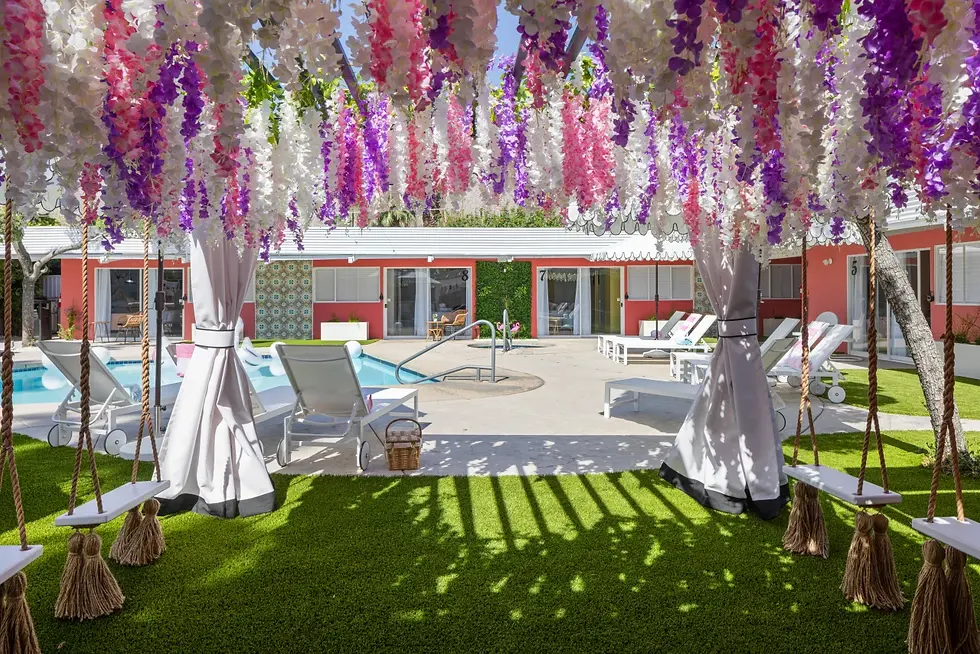
If your group is planning a bachelorette party in Palm Springs and exclusivity is the priority, the Hotel Buyout at The Muse Hotel Palm Springs gives groups of up to 21 guests the run of an adults-only, mid-century modern boutique property with a private pool, outdoor hot tub, and nine individually designed suites, situated about 2.1 miles from downtown Palm Springs. For groups that have done the math on a room block versus a full-property buyout, this is the kind of comparison worth running before you sign anything. Check availability and current rates here.
Content powered by InkSTR.co


Comments